
Review · SANTORINI TRADITIONAL VILLAGE TOURS
Santorini: Private 4-Hour Cultural Villages Sightseeing Tour
Santorini’s best stories often sit away from Oia’s bright lanes and Fira’s cliff edge. This four-hour private tour takes you through Pyrgos, Megalochori, Emporio, and ancient Akrotiri, linking village life, Venetian defenses, and one of Greece’s major archaeological sites.
I like the flexible route, which lets your guide adjust the balance between villages and ruins. I also like the human touch reported from guides such as Dimitrius and Argyris, who added local stops, photos, and clear explanations rather than simply driving from one sight to the next. The main drawback is pace: four hours is enough for an overview, but not for lingering at every village or giving Akrotiri the time it deserves.
Key points to know

- Pyrgos gives you hilltop views and a Venetian castle: Expect narrow lanes, old churches, vineyards, and fortress remains built into the village.
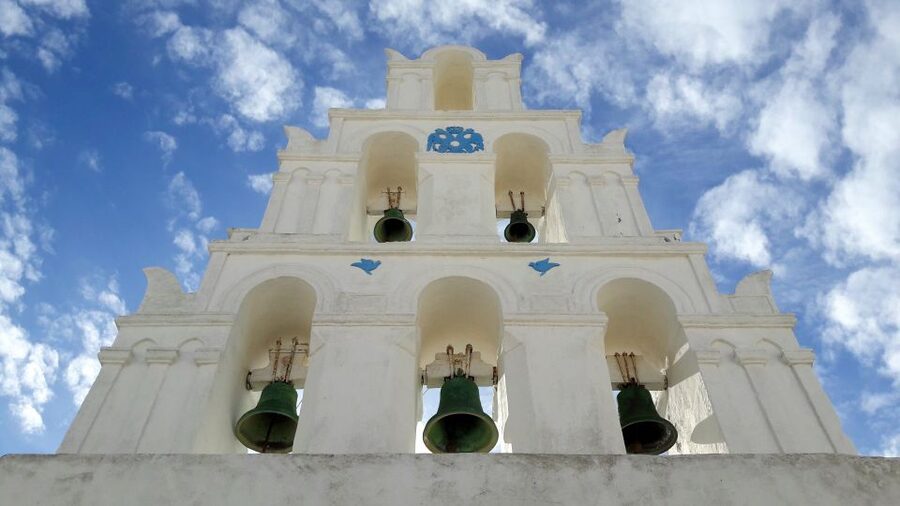
- Megalochori offers a quieter look at Santorini: Its white houses, bell towers, cave homes, and small paths feel more residential than the island’s famous postcard towns.
- Emporio explains the island’s pirate defenses: The old village was built with tight streets and side-by-side houses around a Venetian castle.
- Akrotiri is the tour’s major historical stop: Admission is included at the preserved Bronze Age settlement covered by volcanic ash.
- Private transport saves time: Hotel, airport, ferry terminal, and cruise-port pickup are available, with an English-speaking guide and bottled water.
- Comfortable shoes matter: Expect uneven paths, steps, narrow lanes, and walking in the sun. The tour is not suited to people with mobility impairments or heart problems.
Why these four Santorini stops work together
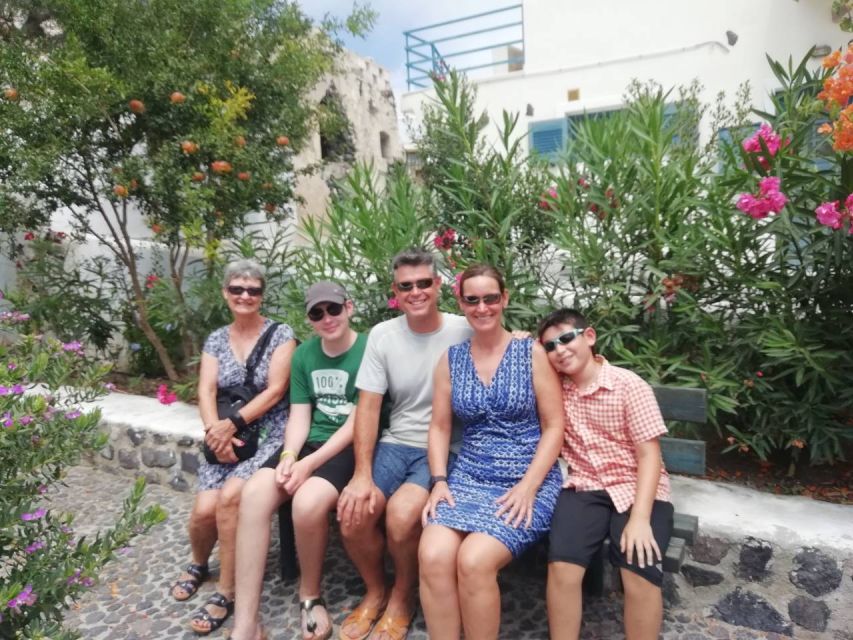
This is not a standard Oia-and-Fira sightseeing loop. Instead, the route moves through the island’s middle and southern sections, where you can see how people lived, defended themselves, worshipped, stored wine, and built homes into the volcanic ground.
The variety is the real strength. Pyrgos gives you a hilltop settlement and broad views. Megalochori slows the pace with traditional homes and quiet lanes. Emporio adds medieval fortifications. Akrotiri reaches much farther back, to a Bronze Age town destroyed by a volcanic eruption.
You will not get an exhaustive look at Santorini in four hours. You will get a useful cross-section of the island, with private transport between stops and a guide who can explain what you are seeing as you go.
More Village Tours in Santorini:
- Santorini’s Iconic Villages: Oia, Imerovigli & Firostefani
★ 4.5 · 708 reviews - Megalochori: Lost Atlantis 9D Experience Museum Entry Ticket
★ 4.6 · 440 reviews - Santorini in 5 hours: Oia, Traditional Villages & Black Beach
★ 5.0 · 282 reviews
Pyrgos: Santorini’s hilltop old town
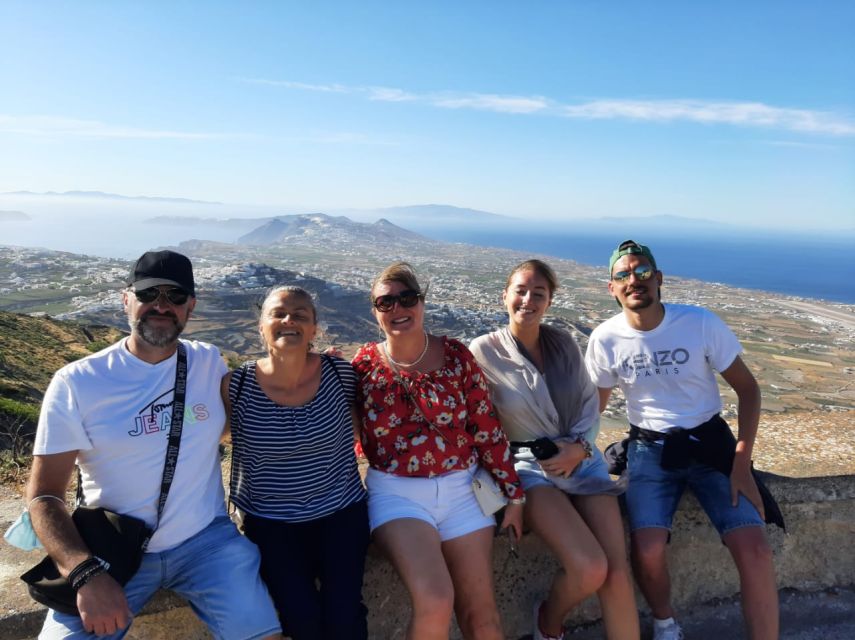
Pyrgos is one of the strongest opening stops because it immediately changes your view of Santorini. Rather than focusing on sea-facing hotels and famous sunsets, you are looking at a settlement built high on a hill for defense and visibility.
The village is often described as Santorini’s historic monument, and its old core is shaped by that past. The remains of an 18th-century Venetian castle are built into narrow lanes and curved, circular roads. These tight routes were not laid out for easy sightseeing. They helped protect the settlement and made the hilltop harder for attackers to enter.
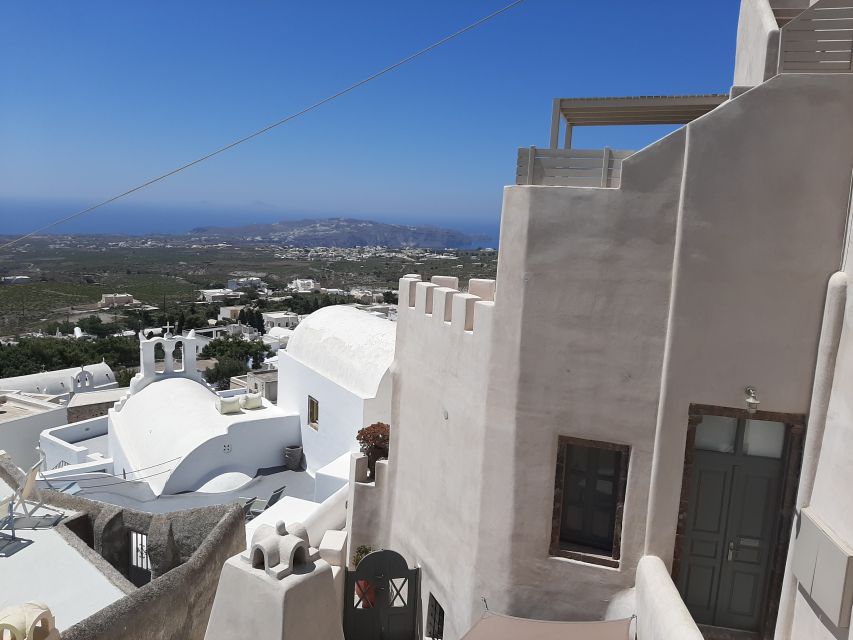
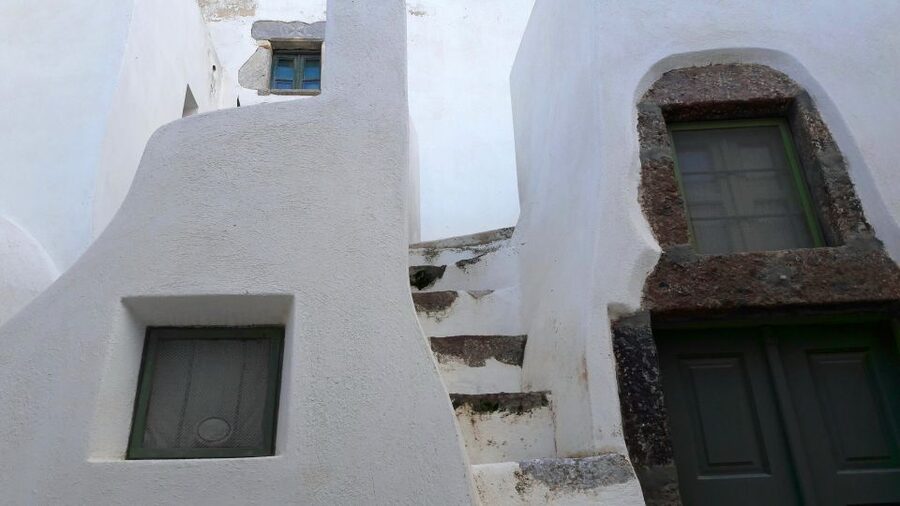
As you walk, you will pass whitewashed homes, small chapels, churches, cave houses, balconies, vineyards, and pebbled paths. The architecture is not presented as a single grand monument. Its appeal comes from how the homes, lanes, and religious buildings fit together.
I would pay attention to the practical details here. Cave houses were shaped by the island’s volcanic material and climate, while the narrow streets offered shade and protection. The castle area also gives you a useful sense of Santorini before modern tourism changed the coastline.
Pyrgos is built on a slope, so the walk is not flat. Comfortable shoes are important, and anyone with a heart condition or mobility limitation should consider the physical demands before booking. Sunglasses and water are also sensible in the open sun.
Megalochori: quiet lanes and cave houses
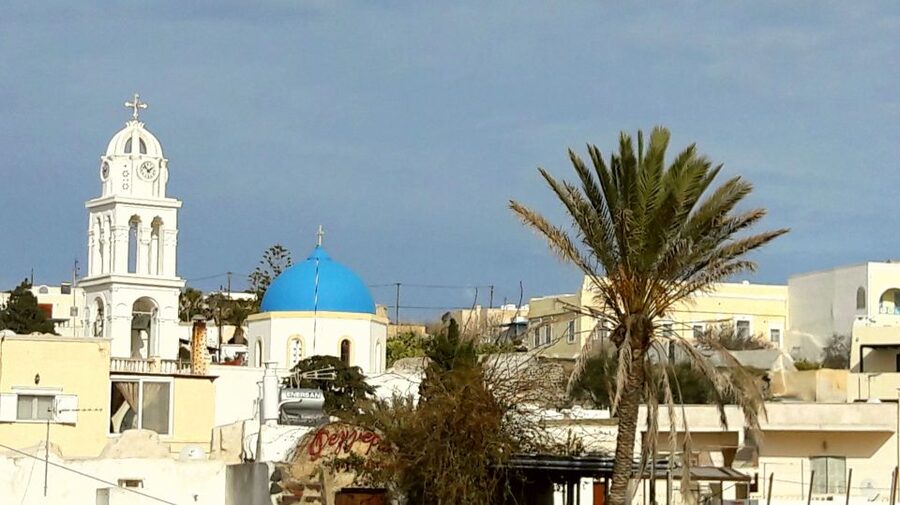
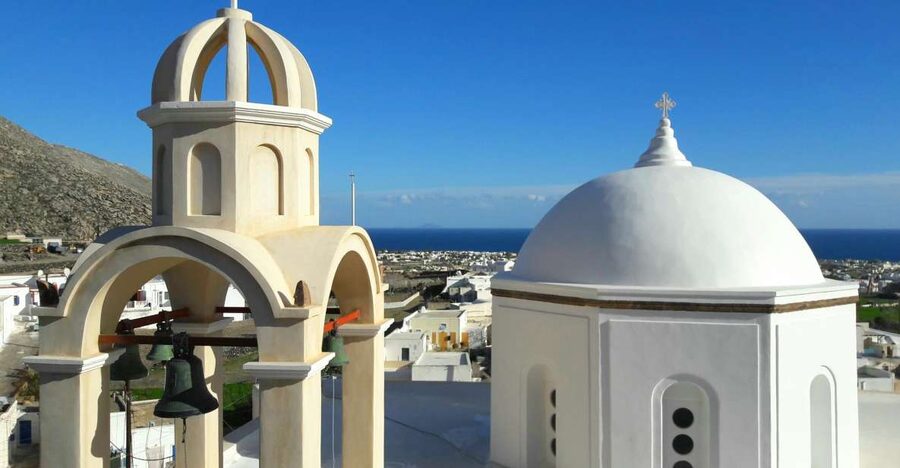
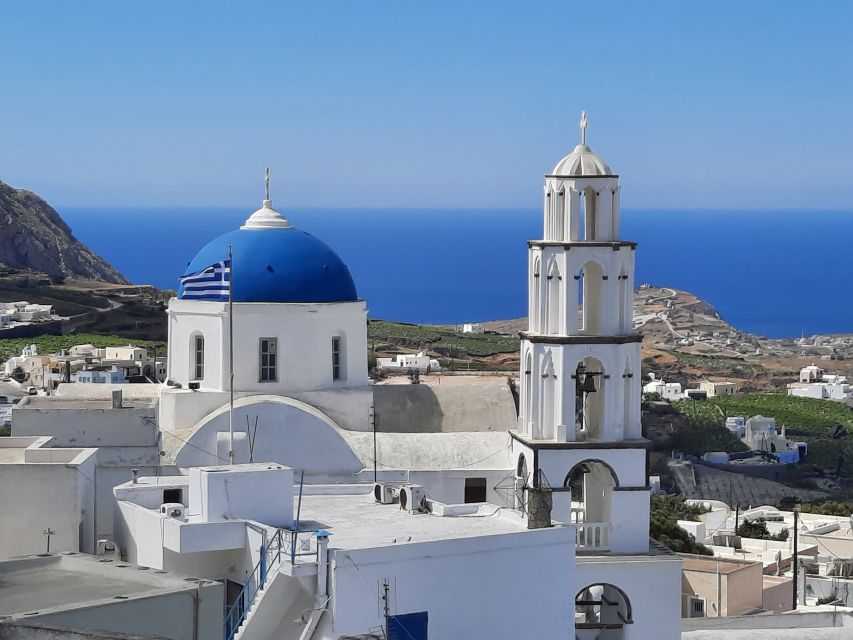
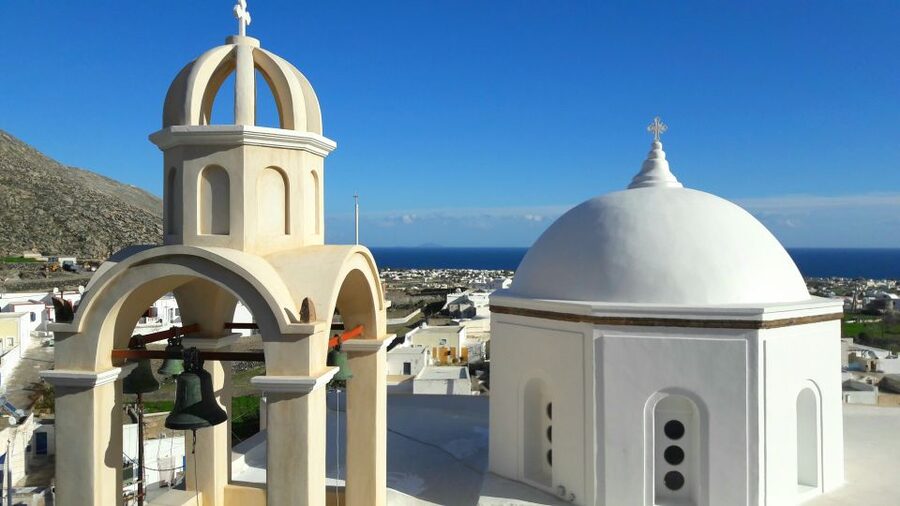
Megalochori offers a gentler look at traditional Santorini. The village is made up of small white homes, tiny lanes, tower bells, blue-domed churches, and underground cave houses. You will be walking rather than simply stopping for a quick photograph, so this is where the tour’s slower side comes through.
The setting is described as less shaped by mass tourism than Oia or Fira. That does not mean you should expect an untouched village, but the emphasis is on local architecture and daily surroundings rather than a famous viewpoint or shopping street.
I like Megalochori because it helps explain that Santorini’s identity is not only about cliffs and sunsets. The village shows how homes were arranged around narrow passages, courtyards, churches, and practical underground spaces. The small scale makes it easier to notice doorways, balconies, bells, and the way white walls reflect the strong island light.
Your guide can add useful context here, especially if you are curious about cave homes or the island’s old village design. The route is customizable, so you can ask for more time in Megalochori if traditional architecture matters more to you than fitting in every possible photo stop.
The tradeoff is that this stop may feel understated if you want a major monument at every turn. Its value comes from close observation. Give it your attention, and the village becomes more rewarding.
Emporio: a village shaped by fear of pirates
Emporio takes you into another chapter of Santorini’s past. During the Venetian period, it served as the island’s commercial center and gateway to the southern settlements. Its old design reflects a practical concern: protection from pirate raids.
Residents built houses side by side along small, tight streets. The result is a compact settlement with narrow passageways and a Venetian castle at its center. You can walk through the castle area and look out toward the volcanic terrain.
This is a good place to notice how defensive architecture affected ordinary life. Protection was not limited to a thick wall or a single fortress. The village itself became a barrier, with homes and passageways arranged to make entry difficult.
Emporio is also a useful contrast with Pyrgos. Both have defensive roots, but they offer different settings. Pyrgos rises on a hill with open views, while Emporio feels more enclosed and maze-like. If your guide explains the reason behind the layout, the narrow streets become easier to read.
The old lanes may be uneven and confined. They are photogenic, but you should not expect wide paths or a polished museum route. Take care with your footing, especially in sandals.
More Sightseeing Tours in Santorini:
- Private Classic Santorini Panorama: Visit the most popular destinations!
★ 5.0 · 872 reviews - 6-Hour Private Best of Santorini Experience
★ 5.0 · 720 reviews - Private Santorini Sightseeing Tour – Customizable,Cruise Friendly
★ 5.0 · 717 reviews - Santorini Highlights Small-Group Tour with Wine Tasting option
★ 5.0 · 699 reviews
Akrotiri: the archaeological centerpiece
Akrotiri is the tour’s most important historical stop. The prehistoric settlement dates to the Minoan Bronze Age and was preserved under volcanic ash after a major eruption. The site offers a rare look at one of Europe’s early civilizations.
Admission is included, and the tour provides skip-the-ticket-line access. That matters on a short private outing because waiting at the entrance would take time away from the site itself.
Akrotiri is not simply a collection of ruins. Its importance comes from preservation. The volcanic ash covered the settlement and protected parts of the town for centuries. You can use the site to picture a developed Bronze Age community rather than thinking only of the later Venetian villages.
Your guide’s commentary is especially useful here. Without context, ancient walls can look like disconnected stone shapes. With an explanation of the settlement’s age, volcanic destruction, and place in early European history, the stop becomes the tour’s clearest link to Santorini’s distant past.
The site can also be the most demanding part of the schedule. If you want time to examine the archaeology carefully, four hours across four locations may feel short. You can ask the guide to shorten one village stop, since the itinerary is flexible. I would do that if ancient history is your main reason for booking.
The description of Akrotiri as a lost city can sound dramatic, but the historical point is sound: this was a substantial settlement that prospered for centuries before the eruption ended it. The site gives Santorini a much older story than its familiar white buildings suggest.
What the private format changes
A private vehicle is the main practical advantage. You are picked up at your hotel, the airport, a ferry arrival terminal, or another agreed point accessible by vehicle. At the end, you can return to the starting point or choose another place on the island.
That flexibility is valuable in Santorini, where a fixed group schedule can make village visits feel rushed. You can ask to spend more time at Akrotiri, focus on churches and cave homes, or adjust the order of the stops. The guide can also suggest a change if traffic, timing, or your interests make the original plan less useful.
The tour is conducted in English. Guides who have led this experience include Dimitrius, Argyris, Michele, and Irene. Dimitrius has been praised for his warmth and island knowledge, while Argyris was noted for adding local areas and taking photos. Michele and Irene were also described as friendly, helpful, and well prepared.
That does not guarantee a particular guide on your date, but it does give you a sense of the service style to expect: personal explanations, an open attitude toward route changes, and help with photographs when time allows.
Bottled water and hand towels are included. Those are small touches, but they are useful after walking through sunny lanes and archaeological grounds.
Cruise-port pickup needs careful planning
Cruise passengers have a different arrival process. After leaving the ship, you take a tender boat from the ship’s gangway to the cruise port. From there, you take the cable car up to Fira, which takes about three minutes.
The cable car is not included. The stated cost is €6 per person each way, so you should add that to your day’s budget if you are meeting the guide at the top station. Your driver will wait at the cable car exit with a sign bearing your name.
This meeting arrangement is clear, but timing still matters. Cruise ship visitors should allow for the tender process, the cable car queue, and finding the meeting point. A four-hour tour does not mean four hours from the moment your ship reaches the caldera. Your actual sightseeing time begins after you reach Fira and meet the driver.
For airport and ferry arrivals, the driver meets you at the arrivals terminal with a sign showing your name. Hotel pickup is also available, though the vehicle will use the closest point that can be reached by car.
Is $330 good value for four hours?
The listed price is $330 per group up to one person, so you should confirm the final party pricing when booking. On a private tour, the price is paying for more than admission. It covers private transport, pickup and drop-off, an English-speaking guide, bottled water, hand towels, and entry to Akrotiri.
I see the best value for people who want to cover several parts of Santorini without arranging separate taxis. Moving between Pyrgos, Megalochori, Emporio, and Akrotiri on your own would take planning, and you would not automatically have live commentary at each stop.
The value is weaker if you only want one village and a long archaeological visit. In that case, four hours across four locations may feel too spread out. It is also less appealing if you prefer to explore alone and do not need private transport.
For a couple, family, or small private party, the price can make more sense because the vehicle and guide serve your group rather than a large shared crowd. Since the supplied price is expressed as a group rate for up to one person, check how the booking platform applies the charge to your party before paying.
Who should book this Santorini tour?
I would recommend it to you if you have already seen, or plan to skip, the busiest parts of Oia and Fira. It is also a good fit if you want a guide to connect architecture, village life, Venetian rule, and Bronze Age archaeology in one outing.
History-minded visitors will get the most from Akrotiri and the castle villages. Photographers will appreciate the lanes, domes, balconies, vineyards, and volcanic views. First-time visitors can use the route as an introduction to Santorini beyond its most famous towns.
I would be cautious if you have trouble walking on uneven ground, difficulty with hills and steps, or heart problems. The tour is not suitable for people with mobility impairments or heart conditions, and unaccompanied minors are not allowed.
Bring comfortable shoes and sunglasses. The tour includes bottled water, but light clothing and sun protection are sensible choices for walking between white walls and open viewpoints.
Should you book it?
Book this tour if you want a private, flexible introduction to Santorini’s inland villages and ancient past rather than another cliffside viewpoint. Its strongest features are the range of stops, included admission to Akrotiri, and the chance to adjust the route with your guide.
Skip it if your priority is a long, unhurried archaeological visit or a relaxed day in one village. For most people with limited island time, though, this is a smart way to see four distinct sides of Santorini, with enough historical context to make the scenery mean more.
FAQ
How long does the Santorini cultural villages tour last?
The tour lasts four hours.
Which villages are included?
The route includes Pyrgos, Megalochori, and Emporio, followed by a visit to the archaeological site of Akrotiri.
Is Akrotiri admission included?
Yes. Admission to the Akrotiri Archaeological Site is included, along with skip-the-ticket-line access.
Is the tour private?
Yes. It is offered as a private group experience with an English-speaking live guide.
Where can pickup take place?
Pickup is available from your hotel, Santorini International Airport, or a ferry arrival terminal. Cruise passengers meet the driver at the top cable car exit in Fira.
Do cruise passengers pay for the cable car?
Yes. The cable car ticket is not included. The stated price is €6 per person per ride.
Is the itinerary flexible?
Yes. The itinerary can be customized according to your preferences, and you can finish at the original pickup point or another preferred place on the island.
Just added around Santorini
- Private Fishing Tour – Sunset (transportation included)★ 5.0 · 25 reviews
- Unique 3-Hour Tour of Santorini for Cruise Ship Passengers★ 5.0 · 3 reviews
- Perivolos: Beach Experience at Wet Stories★ 3.7 · 29 reviews
- Private Fishing Tour – Morning (transportation included)★ 5.0 · 8 reviews
- Romantic Private Day Tour in Santorini★ 5.0 · 5 reviews
- Santorini Rent a Boat – License free private cruise★ 5.0 · 11 reviews
- Winery – Oia Sunset Tour★ 4.5 · 4 reviews
- Woodcarving Workshop in Santorini★ 5.0 · 7 reviews
Santorini Traditional Village Tours, compared.

Santorini’s Iconic Villages: Oia, Imerovigli & Firostefani
Read our review →
Private Cultural Villages Sightseeing & Akrotiri Excavations
Read our review →

Oia Sunset and Traditional Villages Full Day Tour
Read our review →

6hr Small Group Shore Excursion Villages & Wine
Read our review →
Private Santorini 4-Hours Tour : Oia, Megalochori & wine tasting
Read our review →Browse the lists this tour appears in