
Review · SANTORINI COOKING CLASSES
Cooking Class with Private Chef – prepare & enjoy local menu
Santorini’s best food is often humble: tomatoes, fava beans, capers, herbs, and pasta shaped by a dry island climate. This three-hour class puts those ingredients to work, with a chef guiding you through a traditional lunch before you sit down to eat it in a cave house or under a bougainvillea tree. The old-home setting and family-style recipes give the lesson more character than a polished cooking studio.
I especially like the steady pour of local Assyrtiko wine and the chance to make Santorini specialties that you may not order at a standard restaurant. The menu also gives you several useful tastes of the island: tomato fritters, fava spread, Santorini salad, garlic pasta, and halva. The main drawback is the small kitchen. You will help prepare the meal, but much of the work may involve stirring and slicing rather than cooking every dish from start to finish. The meal is also entirely vegetarian, apart from the pasta itself.
Key things to know before booking
- The menu is strongly vegetarian: Expect salad, fava spread, tomato fritters, garlic pasta, and halva, with no meat or other stated protein.
- The cooking takes place in an old home: The traditional cave-house setting is part of the charm, but the kitchen is small.
- Hands-on work is limited: You will prepare ingredients and take part in the process, though the chef handles much of the cooking.
- Assyrtiko is served throughout: Local Santorini wine accompanies both the preparation and the meal.
- Lunch is included: You eat the food prepared during the class, along with the equipment and ingredients used.
- The class starts at 11 a.m.: Plan to reach To Spitiko Mas in Megalochori, since transportation is not included.
Cooking Santorini food at To Spitiko Mas
You meet at To Spitiko Mas in Megalochori at 11 a.m. The class lasts about three hours, so this is best viewed as a late-morning activity that carries you into lunch. It is not a quick demonstration followed by a snack. You spend time preparing a full menu, baking dessert, drinking wine, and then eating together.
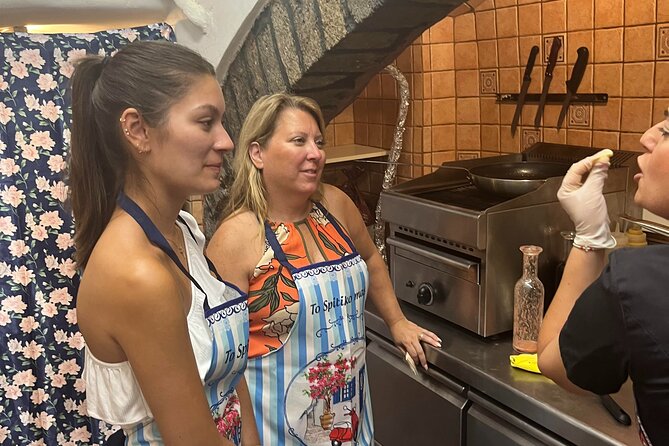
The setting matters here. Rather than cooking in a modern teaching kitchen, you work in a traditional home. The meal may be served inside the cave house or outdoors beneath a large bougainvillea tree. That gives the class a more personal sense of place, though it also means you should not expect wide counters, individual workstations, or restaurant-school precision.
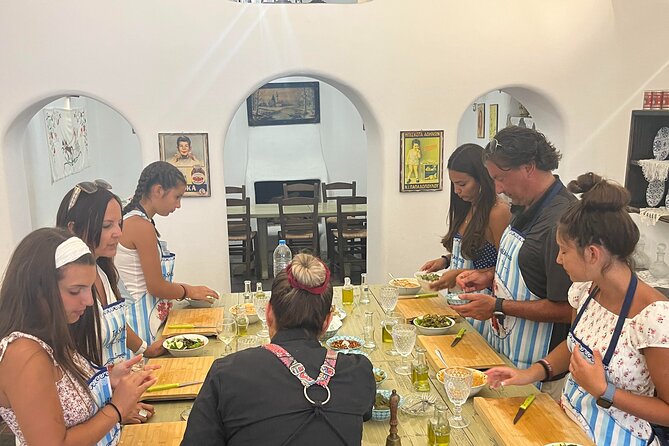
The group can include up to 15 people. That is still a manageable size for a guided food activity, but the phrase private chef should not lead you to assume a one-to-one lesson or a completely private booking. The chef guides the group, and the space shapes how much each person can do.
More Cooking Classes in Santorini:
- Greek Cuisine Cooking Class in Santorini with Recipes and Wine
★ 5.0 · 969 reviews - Exclusive Cooking Experience in our Cave Home by Petra Kouzina
★ 5.0 · 572 reviews - Santorini: Cooking Class with Lunch and Wine Tasting
★ 4.8 · 289 reviews
What you actually do in the small kitchen
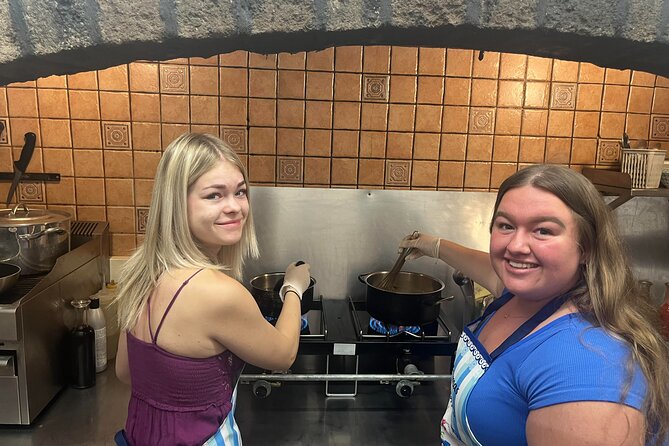
The most useful expectation to set is this: you are taking part in a traditional home cooking session, not running a separate dish from beginning to end. In a small kitchen, the chef will need to control the heat, timing, and final assembly. You may stir mixtures, slice vegetables, and help prepare ingredients while the chef manages the parts that require more room or close attention.
That arrangement has a clear tradeoff. If you want intensive instruction in knife skills, sauces, or professional kitchen technique, this may feel light on hands-on work. If you want to learn how a Santorini family meal comes together, the format makes sense. You can watch the order of preparation, hear the stories behind the recipes, and taste the ingredients as they become lunch.
The food is connected to the chef’s grandmother, which adds a personal thread to the lesson. You are not simply following a generic Greek cookbook. The recipes are presented as part of a family tradition, and that is likely to be one of the most memorable parts of the class.
The opening plate: Santorini salad and local produce
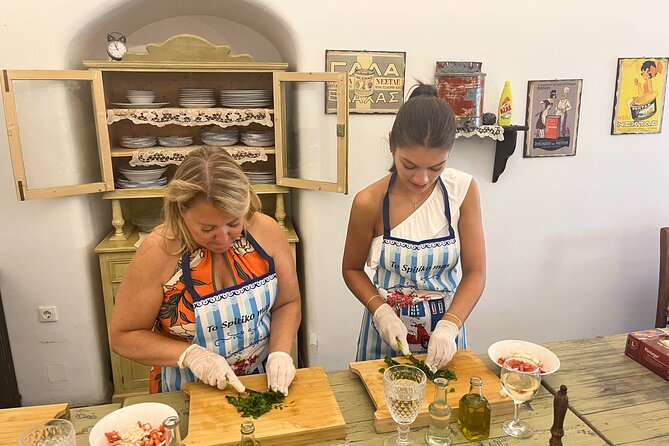
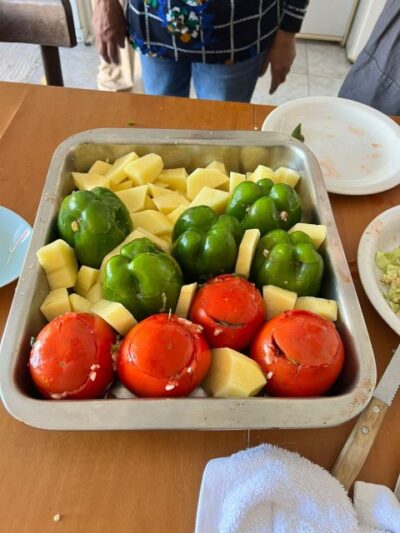
The Santorini salad is a simple showcase for island ingredients. It combines tomatoes, cucumber, green bell pepper, onion, olives, capers, and feta cheese. There is no elaborate technique here, and that is the point. The class lets you see how a few sharp, salty, fresh ingredients form a complete first course.
The tomatoes have a special role in Santorini cooking. The island’s dry conditions suit crops that can concentrate flavor, and the local tomato appears again in the fritters. You will also see how capers, olives, and feta bring salt and bite without heavy sauces.
This is a good dish for understanding the character of the menu. It is fresh but not delicate, and it relies on pantry staples as much as on produce. You will prepare and slice some of the vegetables yourself, one of the more likely hands-on parts of the class.
Fava spread, a Santorini staple
Next comes the local fava bean spread. Santorini’s fava is a well-known island food, and it is different from the green beans many people associate with the word fava. Here it forms a smooth, savory spread that works as an appetizer or shared table dish.
The fava is important because it shows how island cooking makes a satisfying dish from a simple crop. You do not need meat to make the meal feel substantial, though people who prefer a protein-centered lunch should take note. The menu does not include meat, fish, or another separate protein course.
You will likely see more preparation than performance in this part of the lesson. The chef’s job is to keep the texture and seasoning on track, while your role is to help with the shared work. For many people, that is enough participation to feel involved without turning lunch into a demanding kitchen assignment.
A completely different way to spend a day on the island:
- Santorini Classic Catamaran Cruise with BBQ, Drinks and Transfers
★ 5.0 · 3,933 reviews - Half-Day Exclusive Catamaran Cruise in Santorini with Meal and Open Bar
★ 5.0 · 2,975 reviews - Santorini Gold Catamaran Cruise with Snorkel, BBQ & Open Bar
★ 4.8 · 2,822 reviews - Private Santorini Tailor Made – Choice of the Guest!
★ 5.0 · 1,972 reviews
Tomato fritters with island flavor
Tomato fritters are one of the more distinctive items on the menu. They use local tomatoes, flour, spices, and herbs, turning familiar ingredients into a crisp, savory starter. This is the dish that most clearly shows how Santorini cooks make the most of their local produce.
Because the fritters need careful cooking, the chef may handle much of the work in a small kitchen. You can still follow how the mixture comes together and watch the transformation from chopped tomato to a cooked appetizer. If you hoped to fry every batch yourself, the limited workspace could disappoint.
The fritters also help balance the meal. The salad and fava are cool and soft, while the fritters provide a more cooked, textured bite. Together, the first courses give you three different ways to use local vegetables and legumes.
Santorini garlic pasta for the main course
The main dish is Santorini garlic pasta, made with pasta in a red sauce containing plenty of garlic. It is a straightforward dish, but it fits the style of the meal: familiar ingredients, bold seasoning, and no unnecessary decoration.
Do not expect a meat sauce or a separate main protein. This is a vegetarian lunch, and the pasta is the most filling course. If you like garlic, tomato, and simple pasta dishes, you should find the main course easy to appreciate. If you are looking for lamb, seafood, or grilled meat, you will want to choose a different food activity or plan another meal afterward.
The pasta also gives the class a useful lesson in everyday cooking. You are not learning a restaurant showpiece that would be hard to repeat. You are seeing how a local kitchen builds a satisfying dish from pasta, red sauce, garlic, and seasoning.
Baking halva with Santorini dried grapes
Dessert is halva made with semolina, Santorini dried grapes, syrup, and cinnamon. This is a fitting finish because it uses a traditional sweet base and adds an island ingredient. The dried grapes give the dessert a local connection without making it overly complicated.
The class includes baking this dessert, so the cooking is not limited to savory food. You can follow the change from semolina mixture to a finished sweet, then enjoy it after lunch. Cinnamon and syrup give it a warm, familiar profile, while the dried grapes provide texture and sweetness.
If you prefer a light dessert, keep in mind that semolina and syrup make halva fairly hearty. It is a traditional ending rather than a delicate pastry course. Served after the salad, fava, fritters, and pasta, it completes a generous meal.
Assyrtiko makes the class feel like lunch
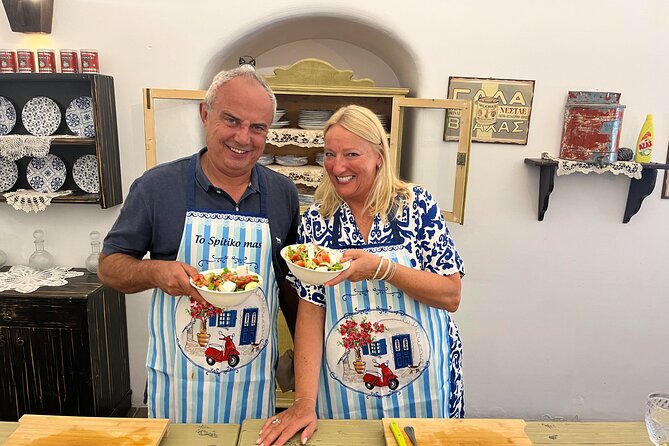
Local Assyrtiko wine is served during the preparation and again with the meal. This is more than a beverage add-on. Assyrtiko is one of the wines most closely associated with Santorini, so drinking it alongside island food gives the class a stronger local focus.
The wine is included in the price, which helps the value. You are not paying separately for each glass while you cook. Still, the presence of alcohol matters when you plan your day. The class begins at 11 a.m., and wine is served throughout, so you may want to keep the rest of your schedule relaxed rather than stacking this directly before a demanding activity.
If you do not drink alcohol, the supplied details do not state whether an alternative is available. You can ask before booking if that matters to you. The same applies to dietary needs, since the menu is clearly vegetarian but no other substitutions are listed.
Why the traditional setting matters
A cooking class in a modern studio can offer more counter space and more individual practice. This class offers something different: an old home, a cave-house setting, and the option to eat beneath bougainvillea. Those surroundings help connect the food to daily life on Santorini rather than presenting it as a staged culinary exercise.
The tradeoff is practical. Old homes are not always built for group instruction, and the kitchen is small. You may spend more time listening, watching, stirring, or slicing than you would in a purpose-built cooking school.
I would choose this activity for its atmosphere and food stories, not for technical training. The chef’s interaction is a major part of the appeal. You get context for the recipes, especially their connection to the chef’s grandmother, while sharing the work with a group of up to 15 people.
Price, timing, and what you receive
At $130.18 per person, the class is not a budget lunch. Its value depends on how you measure it. You are paying for about three hours of instruction, all ingredients, use of the cooking equipment, a full meal, and local Assyrtiko wine. You also receive the setting and the chef’s guidance, which a normal restaurant meal would not provide.
The price makes more sense if you want an activity, not just food. A restaurant can serve salad, fava, tomato fritters, pasta, dessert, and wine with less time and effort. It cannot give you the same preparation process, family recipe background, or chance to take part in making the meal.
It makes less sense if you mainly want a serious cooking lesson with plenty of individual practice. The small kitchen limits the amount of work each person can do. You should book with the understanding that the food and social setting are as important as the technique.
Your mobile ticket and confirmation are handled at booking, though bookings made within two days of the date may take up to 48 hours to confirm, subject to availability. Free cancellation is available until 24 hours before the 11 a.m. start time. After that point, the amount paid is not refunded, and changes are not accepted.
Getting there and planning your day
The meeting point is To Spitiko Mas, Megalochori 847 00, Greece. Private transportation is not included, but the location is near public transportation. You need to arrange your own way there and back, and the activity ends where it begins.
Allow enough time to reach the meeting point before 11 a.m. The class runs into the lunch hour, so it can work well as the central activity in a day based around Megalochori. You may prefer not to schedule a major sightseeing commitment immediately afterward, since the class lasts about three hours and includes a full meal.
Because the class includes wine and lunch, it is best treated as a substantial part of your day. Bring an appetite, wear clothing you do not mind wearing around cooking ingredients, and be ready for a shared rather than highly individualized format. Those are simple choices, but they make the experience easier to enjoy.
Who should book this cooking class?
I would recommend it to you if you want a food-focused Santorini activity with a strong sense of place. It suits people who enjoy family recipes, local wine, traditional homes, and a relaxed meal more than people seeking formal culinary instruction.
It is also a good match for vegetarians, since every listed dish is vegetarian. People who want to taste several Santorini ingredients in one sitting will get plenty of variety from the salad, fava, tomato fritters, pasta, and halva.
Families and small groups may enjoy the shared format, but the maximum group size is 15, so do not assume an intimate private lesson. The class can also work for couples or solo participants who are comfortable cooking alongside others.
I would hesitate to recommend it to you if you need a meat or seafood course, have strict dietary requirements that have not been confirmed, or want to do most of the cooking yourself. The setting is charming, but the small kitchen limits active participation.
Should you book it?
Book this class if your priority is a warm, traditional food experience: local recipes, Assyrtiko wine, an old home, and lunch prepared with a chef. The strongest reasons to go are the family connection behind the recipes and the chance to taste several Santorini specialties in one sitting.
Skip it if you want a private, technical cooking workshop or a menu with meat and seafood. At $130.18, the class earns its price through the meal, wine, setting, and personal guidance, not through intensive kitchen practice. Set the right expectation, and this can be a memorable way to spend a Santorini morning.
FAQ
Where does the cooking class begin?
The class begins at To Spitiko Mas, Megalochori 847 00, Greece. The activity also ends back at the meeting point.
What time does the class start?
The start time is 11 a.m. The cooking class lasts approximately three hours.
Is transportation included?
No. Private transportation is not included. The meeting point is near public transportation.
What food will I prepare?
The menu includes Santorini salad, fava bean spread, tomato fritters, Santorini garlic pasta, and halva made with semolina, dried grapes, syrup, and cinnamon.
Is the meal vegetarian?
Yes. The listed menu is vegetarian, with no meat or separate meat or seafood protein course.
Is wine included?
Yes. Local Santorini Assyrtiko wine is served during preparation and lunch, and alcoholic beverages are included.
How many people can join the class?
The activity has a maximum of 15 participants.
Can I cancel for a refund?
Yes. You can cancel at least 24 hours before the start time for a full refund. Cancellations or changes made less than 24 hours before the start time are not accepted for a refund.
Just added around Santorini
- Private Fishing Tour – Sunset (transportation included)★ 5.0 · 25 reviews
- Unique 3-Hour Tour of Santorini for Cruise Ship Passengers★ 5.0 · 3 reviews
- Perivolos: Beach Experience at Wet Stories★ 3.7 · 29 reviews
- Romantic Private Day Tour in Santorini★ 5.0 · 5 reviews
- Santorini Rent a Boat – License free private cruise★ 5.0 · 11 reviews
- Private Fishing Tour – Morning (transportation included)★ 5.0 · 8 reviews
- Winery – Oia Sunset Tour★ 4.5 · 4 reviews
- Woodcarving Workshop in Santorini★ 5.0 · 7 reviews
Santorini Cooking Classes, compared.
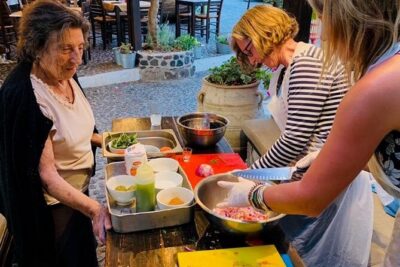
Greek Cuisine Cooking Class in Santorini with Recipes and Wine
Read our review →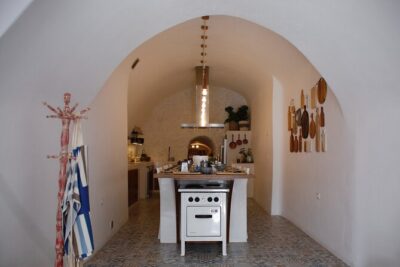
Exclusive Cooking Experience in our Cave Home by Petra Kouzina
Read our review →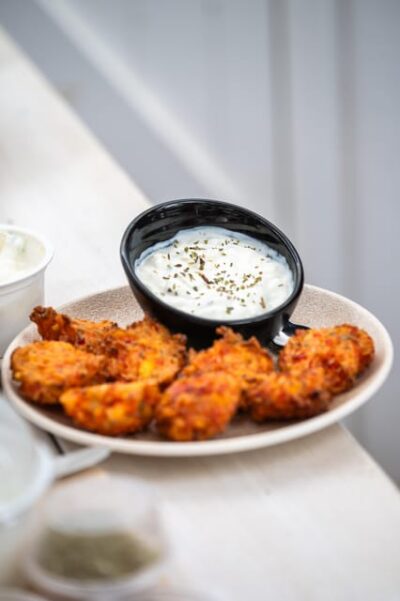
Greek Cooking Class and Lunch with a Local Grandmother
Read our review →
Cooking Class in Traditional cave house in Santorini!
Read our review →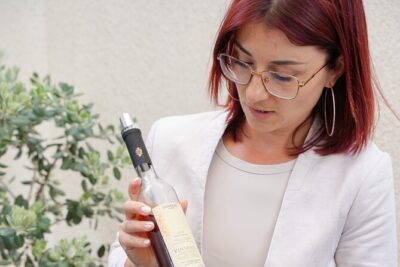
Santorini Family Farm Food & Wine Tour with Cooking Class
Read our review →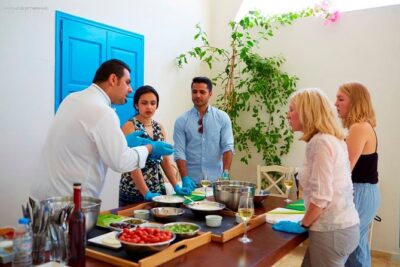
Private Santorini Cooking Class & Wine Tasting Tour
Read our review →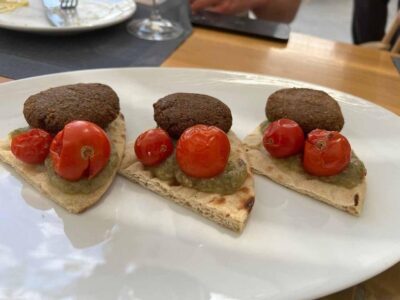
Browse the lists this tour appears in