
Review · AKROTIRI TOURS
Santorini: Experience Akrotiri with a Licensed Tour Guide
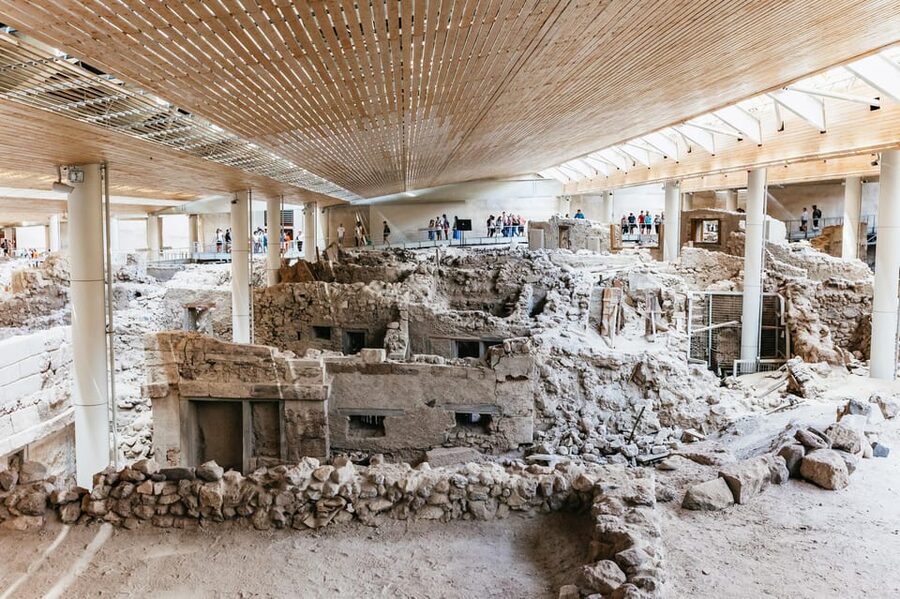
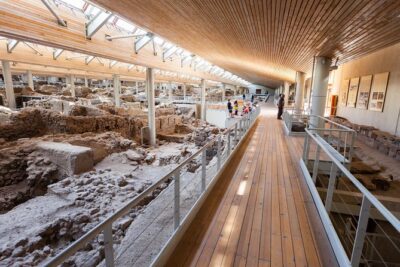
Four thousand years ago, Akrotiri was a proper town, not a scatter of primitive huts. You walk along paved streets and squares, past homes with several floors, kitchens, toilets, and a drainage system. Volcanic ash buried the settlement around 1600 B.C., preserving a remarkable snapshot of Bronze Age life.
I like the way the tour turns bare walls into a city you can picture, and I like the use of photographs showing wall paintings and artifacts now held elsewhere. Guide Dima Georgia, usually called Georgia, is praised for clear English and patient answers. The main drawback is cost: $198 is for a private group up to one person, while the €20 entrance fee per person is extra.
Key points at a glance
- See a real prehistoric town: Walk through streets, squares, homes, and multi-story building complexes rather than viewing isolated objects in glass cases.
- Georgia adds the missing context: Her explanations cover urban planning, daily life, building use, excavation work, and the site’s connection to Atlantis theories.
- Expect a private visit: The tour is for your own group, with an English-speaking licensed guide and no large tour group to keep pace with.
- Plan for about 75 minutes: The guided visit itself lasts about 70 minutes, with the activity listed as 75 minutes overall.
- Budget for the entrance ticket: The €20 admission fee per person is not included, and transfers are also your responsibility.
- Go early if you can: An 8:30 a.m. visit gave one group roughly 30 minutes with the site nearly empty, though opening times can change.
Why Akrotiri feels different from most ruins
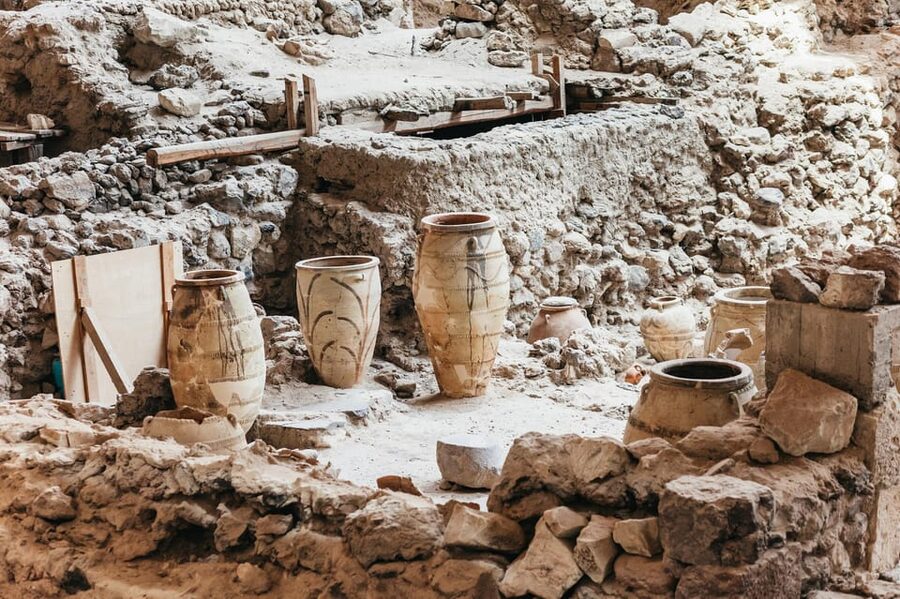
Many archaeological sites ask you to imagine the town from a few foundations. Akrotiri gives you streets, rooms, stairways, doorways, and building levels that still suggest how people moved through their day.
The settlement was covered by volcanic ash after a major eruption around 1600 B.C. That burial helped protect buildings and objects from later damage. The result is not a complete town frozen in perfect condition, but it is far more legible than many prehistoric sites.
You can see evidence of careful planning. The town had paved routes, open squares, drainage works, and buildings rising two or three stories. Kitchens and toilet facilities point to ordinary routines, while the scale of the buildings suggests a well-organized society with skilled builders and a clear social structure.
That is the key to enjoying Akrotiri. It is not only about age. It is about seeing signs of practical decisions made by people who needed water to move, rooms to serve different purposes, and streets that connected one part of town to another.
More Akrotiri tours and tickets:
- Akrotiri: Guided Horseback Riding Day Trip to a Beach
★ 4.9 · 477 reviews - Santorini: Akrotiri Entry Ticket and Audio Guide
★ 3.9 · 348 reviews - Archaeological Bus Tour To Akrotiri Excavations & Red Beach
★ 4.6 · 280 reviews
Meeting Georgia at the archaeological entrance
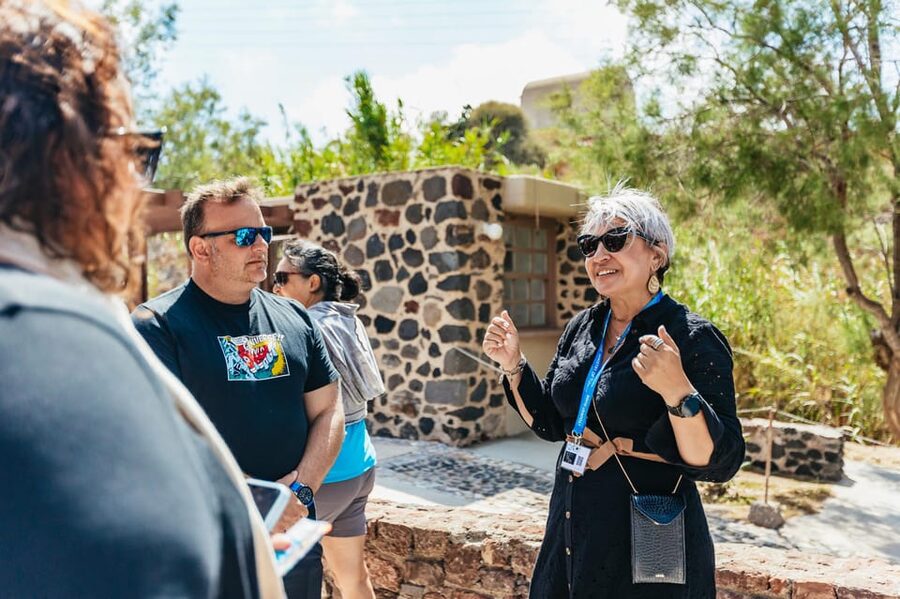
You meet the guide at the entrance to the archaeological site, across from the cashier. The arrangement is simple: you make your own way to Akrotiri, meet Georgia, and collect or arrange your admission before beginning the walk.
The tour includes the guide and private service, but does not include the €20 entrance fee per person. It also does not include transport. If you are coming from a cruise ship, hotel, or another part of Santorini, allow time for your own transfer and confirm the meeting details by email.
The activity is listed as wheelchair accessible. Still, the site is an archaeological excavation with streets, building remains, and changing surfaces, so you should confirm any specific mobility needs when booking.
The tour is in English. The time is confirmed by the provider by email, and opening hours can change. Do not treat a displayed start time as final until you receive that confirmation.
Walking the streets, squares, and building levels
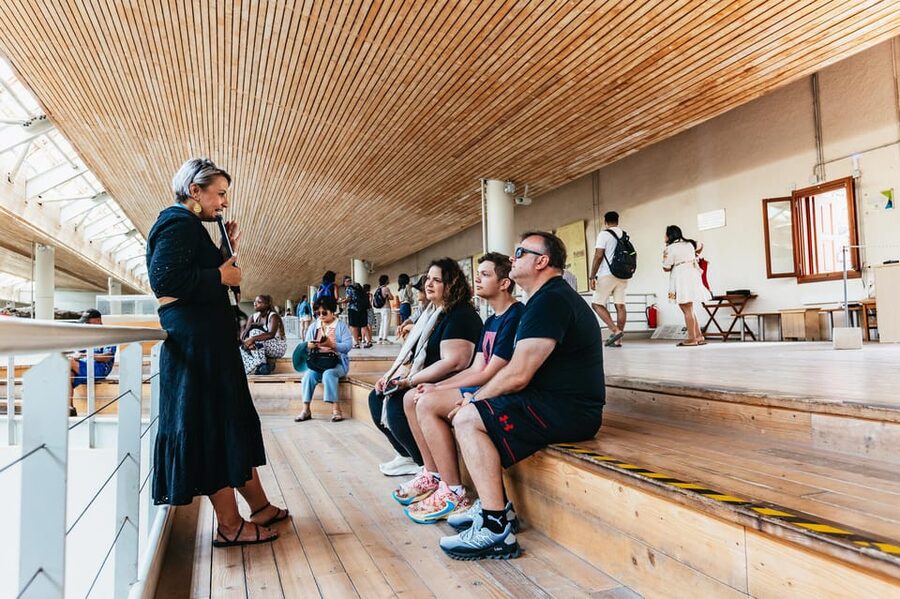
The main visit is a guided walk through Akrotiri. You move along the paved streets and open squares, then stop at building remains where Georgia explains what archaeologists think you are seeing.
This is where a guide earns the fee. Without explanation, a wall or doorway can look like just another fragment. Georgia helps you understand the difference between a street, a room, a work area, and a larger building complex. She also explains how the settlement was organized and what the layout suggests about the people who lived there.
You might look at the lower part of a structure and miss that it once formed part of a two or three-story building. The remains do not always announce their original scale. Photographs, reconstructions, maps, and drawings help you picture the upper levels and the town as a working community.
The walking itself is described as an easy stroll, but the visit is still an archaeological-site tour rather than a polished city sidewalk walk. Wear comfortable shoes and bring a camera. Food and drinks are not allowed inside the activity.
Kitchens, toilets, and an early drainage system
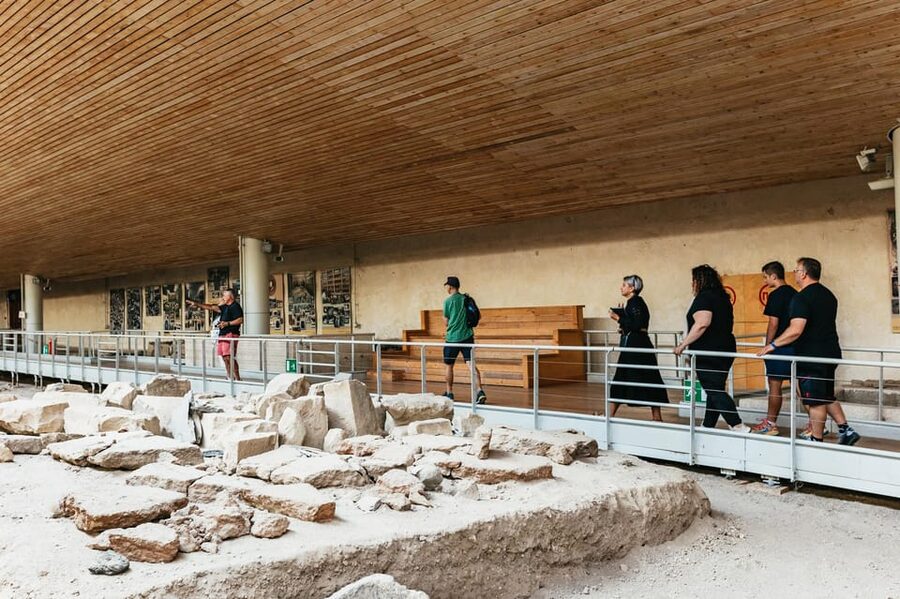
The most memorable details are often the least grand. Kitchens and toilet facilities tell you how people managed daily life. A drainage system shows that practical town planning was not a modern invention.
I find these details more useful than a long list of dates. A date tells you when the settlement existed. A kitchen, pipe, drain, or paved route tells you how it functioned.
Georgia explains what the structures may have been used for and how archaeologists reach those conclusions. That distinction matters. At a site this old, some interpretations are firm while others remain theories. A good guide can point out the difference instead of presenting every guess as fact.
One visitor with a background in ancient history noted that Akrotiri was not a Minoan settlement, a useful correction to a common assumption. The tour places the site in its proper cultural and historical setting rather than relying on broad labels.
A few more Santorini trips worth weighing up
- From Heraklion/Crete: Santorini Island Guided Day Trip
★ 4.4 · 1,448 reviews - Santorini: Sunset Guided Tour with Hotel Pickup
★ 4.8 · 900 reviews - Santorini Luxury Custom Private Tour with Local guide
★ 5.0 · 623 reviews - Fira: Guided Foodie Walking Tour with Tastings
★ 4.9 · 474 reviews
Wall paintings, artifacts, and the parts now elsewhere
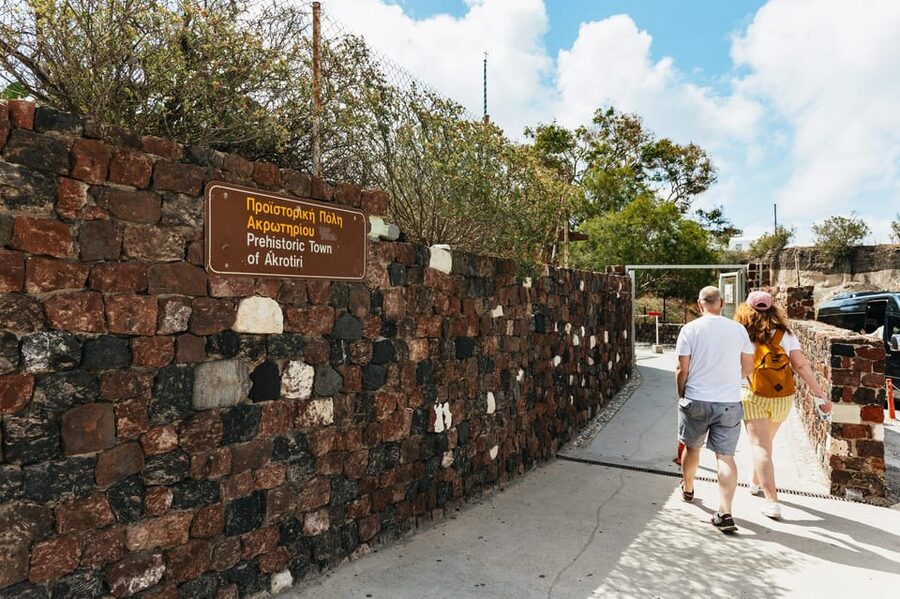
The excavation site cannot show you every object found at Akrotiri. Some wall paintings and artifacts are now displayed in museums around Greece. Georgia brings photographs on a tablet to show what once decorated the buildings and what the excavated material looked like in its original context.
That extra visual material is one of the strongest parts of the experience. You can look at a plain wall and then see an image of the painting associated with it. This helps bridge the gap between the surviving stonework and the lively interiors that once existed above and around it.
Bring a camera for the site itself, but do not expect photography alone to explain what you are seeing. The images supplied by the guide are there to add context, not simply to serve as souvenirs.
The focus is also broader than art. You learn about building use, social organization, excavation progress, and the daily lives of the people who occupied the town. That balance suits you if you want more than a parade of famous objects.
The Atlantis connection, handled as a theory
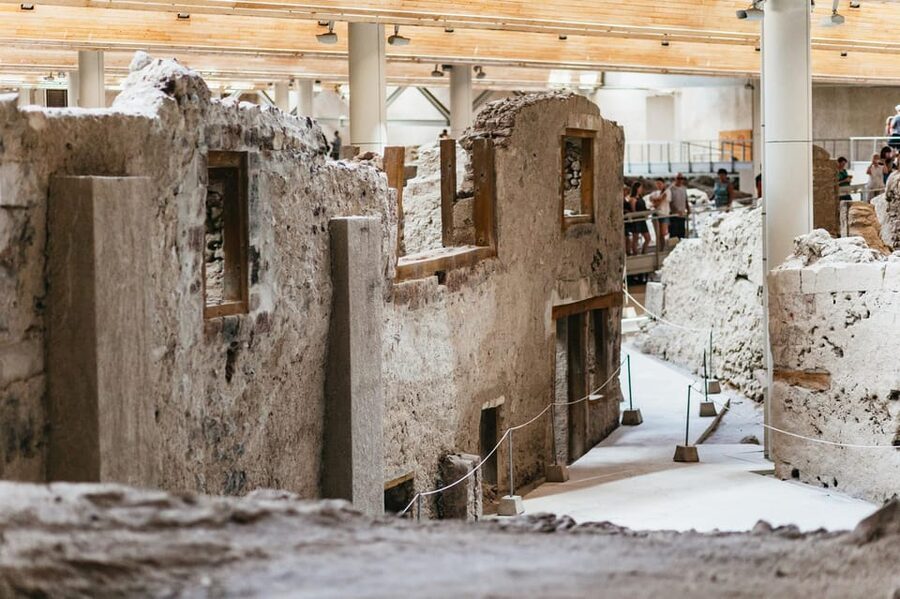
Akrotiri is often linked with the myth of Atlantis. The volcanic destruction, advanced town planning, and sudden burial make the comparison tempting.
The tour discusses the theories connecting the site with Atlantis, but the connection should be treated as an interpretation, not a settled fact. This is a good place for a guide to separate what archaeology can show from what later stories may suggest.
You can see why the idea attracts attention. A sophisticated settlement was destroyed by a powerful eruption and preserved beneath ash. That makes for a striking story, but the archaeological value of Akrotiri does not depend on proving Atlantis.
For me, the real interest is the town itself. Its streets, buildings, water management, and wall paintings already tell a strong story without needing a legendary label.
Why a private guide changes the visit
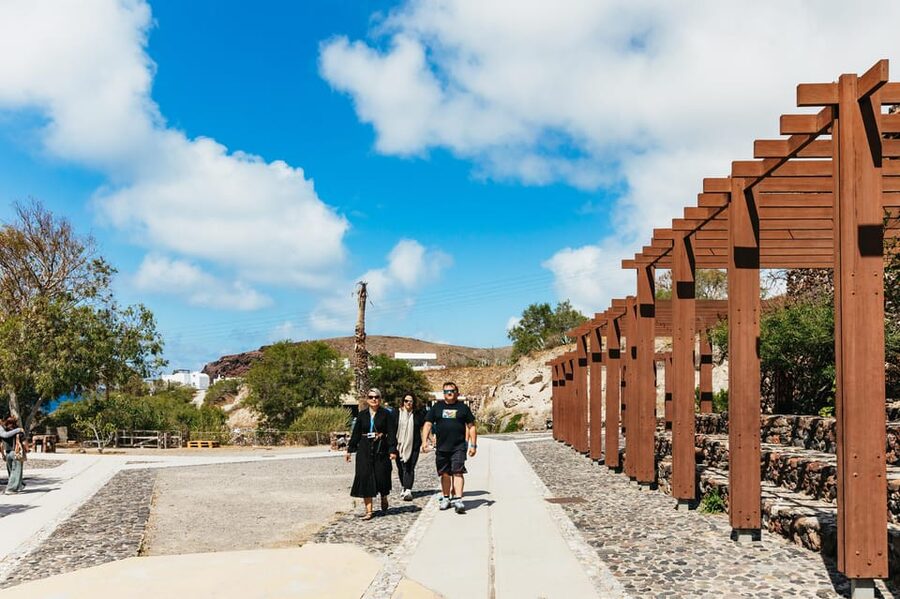
The tour lasts about 70 minutes within a 75-minute activity. That is enough time for a focused explanation of the main remains, but it is not a full-day archaeology course.
A private group gives you room to ask questions and set the pace within the planned time. Families have found the format useful because Georgia can explain ideas patiently and include children in the discussion. She has also been praised for keeping the visit interesting for a mixed group that included an 82-year-old former archaeologist and children aged three to nine.
That flexibility is especially helpful at Akrotiri because the site requires interpretation. Large groups can make it harder to hear or pause at a point that interests you. A private visit keeps the discussion centered on your questions.
The guide also appears to manage the site thoughtfully. During one visit, Georgia noticed other people trying to listen and adjusted her position and voice so her own group could hear clearly. That is a small detail, but it matters at a busy archaeological site.
Timing, heat, and how to plan the visit
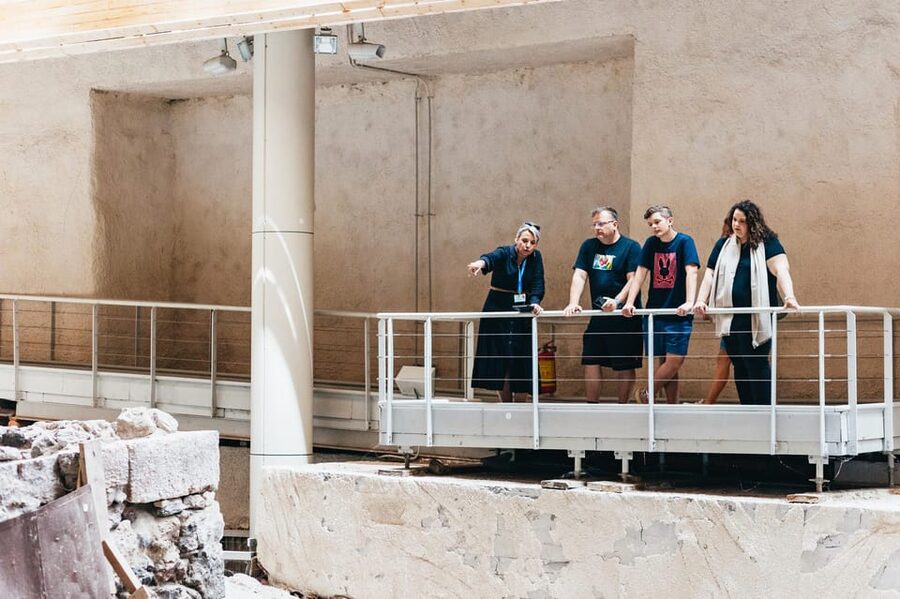
An early start can improve the experience. An 8:30 a.m. private visit gave one group the site nearly to itself for about 30 minutes. This is not a guarantee, and opening hours may change, but the example makes a useful planning point: ask for the earliest practical time if you prefer quieter conditions.
Santorini can be hot, and one family found that children tired quickly in the heat. Georgia was praised for involving them and staying patient, but you should still plan sensibly. Bring water for before or after the site if drinks are not allowed inside, and avoid assuming that a short tour requires no preparation.
The tour is not designed as a transfer service. You need to arrange your own ride to Akrotiri and return transport. This matters most if you are visiting from a cruise ship, since delays can affect your meeting time. One booking was adjusted after a cruise delay, but you should not count on every schedule being equally flexible.
What the $198 private price really means
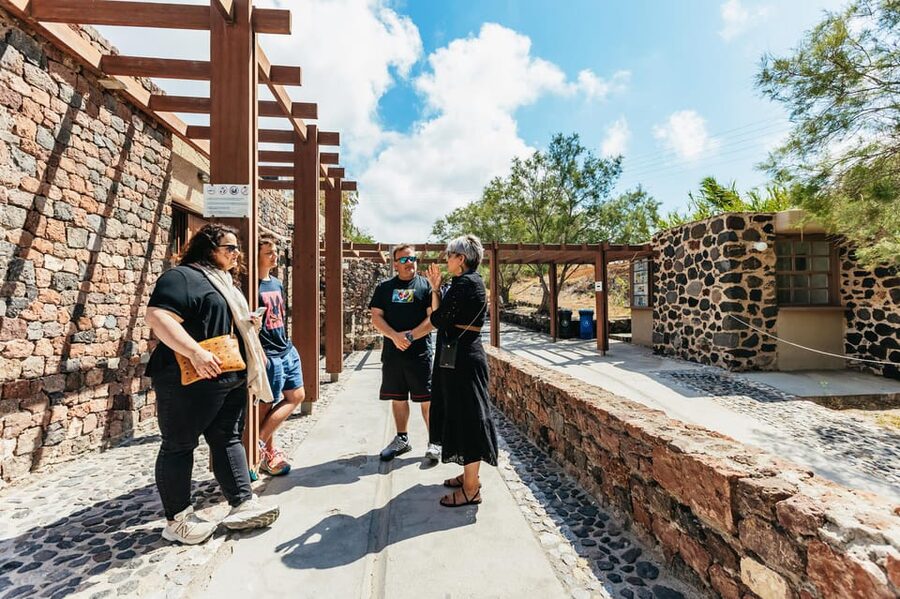
The listed price is $198 per group up to one person. The format is private, so the value improves when you can share the cost with the permitted group size shown during booking. Since the entrance fee is extra at €20 per person, calculate the full cost before deciding.
For one person, the price is a serious splurge for a 75-minute visit. For a private group, it can make more sense, especially if several people want to ask questions or if history is a major reason for visiting Santorini.
The comparison is not simply private tour versus free wandering. You are paying for interpretation at a site where many remains are difficult to identify on your own. Several experienced history enthusiasts found that Georgia explained details they would have missed, including structures, artifacts, maps, and the current state of excavation.
If your main aim is a quick look at old ruins, the price may feel high. If you want to understand how the town worked and why the remains matter, the guide adds substantial value.
Who should book this experience
I would recommend it most strongly to:
- People interested in archaeology, Bronze Age societies, and ancient urban planning
- Families who want a guide able to answer questions at different levels
- Visitors who prefer a private conversation instead of a large group
- Cruise passengers who can protect enough time for transport and the visit
- Anyone who has already seen Akrotiri alone and wants a clearer explanation
- History fans who want to connect the site with artifacts and paintings now held elsewhere
You do not need to be a history specialist. The tour has been adjusted for children, teenagers, older adults, and people with serious academic interest. The strongest common thread is curiosity.
You may want to skip it if you dislike guided visits, have only a very short window in southern Santorini, or want transport included. The activity begins at the archaeological entrance, not at your hotel or port.
Practical details before you reserve
Book only after checking the final time by email. The provider confirms the tour time, and site opening hours can change.
The activity offers free cancellation up to 24 hours in advance and a reserve-now, pay-later option. Those terms help if your Santorini schedule is unsettled, but they do not remove the need to plan transport carefully.
The guide speaks English, the group is private, and the activity is listed as wheelchair accessible. Bring a camera, but leave food and drinks outside the site.
If you want to add more background, visit the Prehistoric Museum in Fira before Akrotiri. One visitor specifically found that seeing the museum first made the archaeological site easier to understand. This is not required, but it can give you a useful introduction to the paintings and objects associated with the settlement.
Should you book the Akrotiri private tour?
Yes, if you want Akrotiri to make sense rather than simply look old. Georgia’s explanations focus on the details that are hardest to read from the ruins alone: the town plan, the building levels, the drainage system, daily routines, wall paintings, and the limits of current archaeological knowledge.
The price needs careful thought, especially for a solo visitor, because admission and transport are extra. But if you are sharing the private booking or have a real interest in ancient history, the guide can turn a brief walk through excavated walls into a clear picture of a working prehistoric town.
FAQ
Where does the Akrotiri tour begin?
Meet the guide at the entrance to the archaeological site, across from the cashier.
How long does the tour last?
The activity is listed as 75 minutes, with the guided tour lasting about 70 minutes.
Is the tour private?
Yes. It is a private group experience.
Is an entrance ticket included?
No. The entrance fee is €20 per person and must be paid separately.
Is transportation included?
No. Transfers are not included, so you must arrange your own transport to and from Akrotiri.
What language is the tour in?
The live tour is conducted in English.
Who is the guide?
The experience is provided by Dima Georgia. Many bookings identify the guide as Georgia.
Can I cancel the booking?
Yes. You can cancel up to 24 hours in advance for a full refund.
Can I reserve now and pay later?
Yes. The activity offers a reserve-now, pay-later option.
What should I bring, and what is not allowed?
Bring a camera. Food and drinks are not allowed during the activity.
Just added around Santorini
- Private Fishing Tour – Sunset (transportation included)★ 5.0 · 25 reviews
- Unique 3-Hour Tour of Santorini for Cruise Ship Passengers★ 5.0 · 3 reviews
- Perivolos: Beach Experience at Wet Stories★ 3.7 · 29 reviews
- Romantic Private Day Tour in Santorini★ 5.0 · 5 reviews
- Santorini Rent a Boat – License free private cruise★ 5.0 · 11 reviews
- Private Fishing Tour – Morning (transportation included)★ 5.0 · 8 reviews
- Winery – Oia Sunset Tour★ 4.5 · 4 reviews
- Woodcarving Workshop in Santorini★ 5.0 · 7 reviews
Akrotiri Tours, compared.
Archaeological Bus Tour To Akrotiri Excavations & Red Beach
Read our review →Archaeological Bus Tour to Akrotiri Excavations & Red Beach
Read our review →
Private Cultural Villages Sightseeing & Akrotiri Excavations
Read our review →
Private Group Visit to Akrotiri & 3 Wineries with Tastings
Read our review →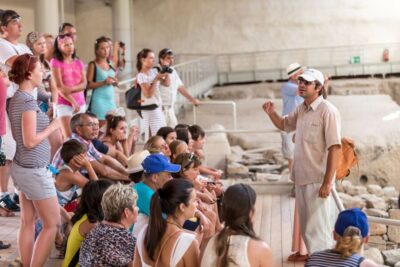
Browse the lists this tour appears in