Review · TICKETS
Skip the Line Lost Atlantis Experience Ticket
Lost Atlantis Experience turns one of Santorini’s biggest mysteries into a one-hour indoor attraction. You’ll watch Atlantis collapse in a 9D presentation, meet Plato through an interactive scene, and study a large model of the mythical city. It is a handy change from the island’s churches, viewpoints, and volcanic sites.
I like two things here: the history is presented clearly, and the attraction gives children something active to do rather than asking them to read wall panels. The catch is that the experience is fairly simple, so older teens and adults who want serious archaeology may find it light.
Key points to know
- The 9D Atlantis show uses several senses, with motion and visual effects that may be startling for sensitive children.
- The large Atlantis diorama gives you a quick visual sense of how the mythical city is imagined.
- Plato’s search for an ideal city links the legend to ancient Greek thought rather than treating Atlantis as pure fantasy.
- A holographic presentation traces Santorini’s geological development, from prehistoric times to the present.
- The visit lasts about one hour, making it easy to fit between other stops in southern Santorini.
- Prebooking costs $16.93 per person, includes admission, and comes with free cancellation up to 24 hours before the start time.
What the Lost Atlantis Experience actually offers
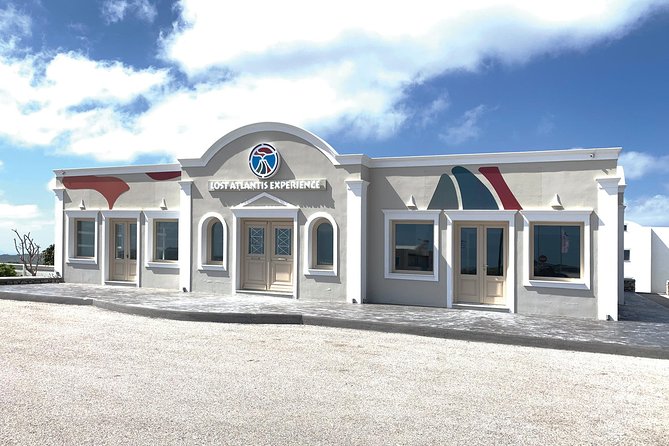
This is not a conventional museum filled with original artifacts. It is a digital attraction built around storytelling, projected images, models, sound, and interactive elements.
The central idea is simple: Santorini’s violent volcanic past may help explain why the Atlantis story has remained tied to the Aegean. The attraction presents that idea through Plato’s writings, the imagined city of Atlantis, and the geological changes that shaped Santorini.
You should expect an organized indoor visit lasting about an hour. The experience is offered in English, and admission is included with the ticket. Since the attraction is aimed at ages 6 and up, it works best as a family activity rather than as a specialist history visit.
I would think of it as a short educational show with museum sections, not as a full archaeological museum. That distinction matters. You are paying for a guided sequence of sights and effects, not for a large collection of ancient objects.
Other Santorini days people book alongside this one:
- Santorini Classic Catamaran Cruise with BBQ, Drinks and Transfers
★ 5.0 · 3,933 reviews - Half-Day Exclusive Catamaran Cruise in Santorini with Meal and Open Bar
★ 5.0 · 2,975 reviews - Santorini Gold Catamaran Cruise with Snorkel, BBQ & Open Bar
★ 4.8 · 2,822 reviews
The 9D destruction of Atlantis
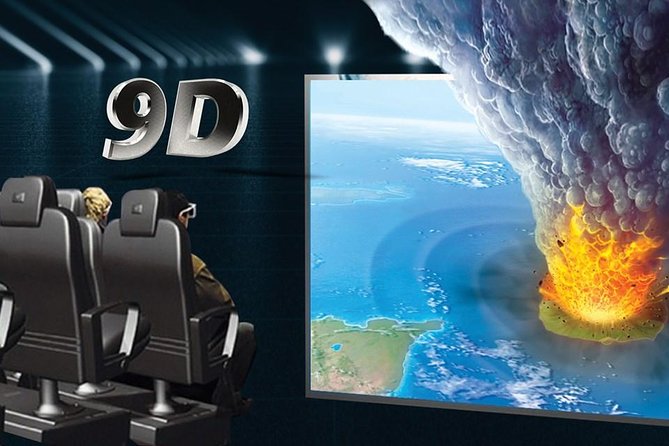
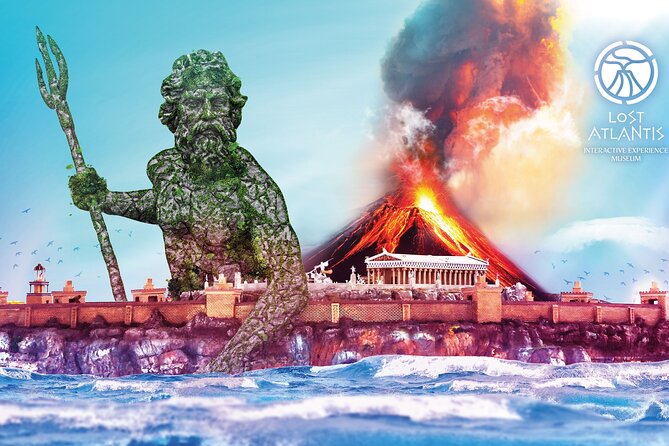
The main dramatic moment is the 9D presentation showing Atlantis’s destruction. The description promises an experience using all your senses, so this is more active than watching a standard documentary.
The appeal is clear. A volcanic eruption can be difficult to picture from a paragraph or a diagram. Motion, sound, and visual effects give children a concrete way to understand the force of a cataclysm. Adults may also find the presentation useful because it connects the myth of Atlantis with the real volcanic activity of the Aegean region.
The effect is not likely to suit every child. A family visit with young children has been described as educational and enjoyable, but the 3D film may feel scary for children under five. The attraction itself is for ages 6 and older, so that age guidance is worth taking seriously if your child dislikes loud sounds, dark rooms, or sudden action.
You will want to keep expectations sensible. This is a themed presentation, not a scientific simulation of a specific eruption. Its job is to make the story memorable and accessible. For a child who learns best through movement and pictures, that is a useful trade-off.
Plato, the ideal city, and the Atlantis question
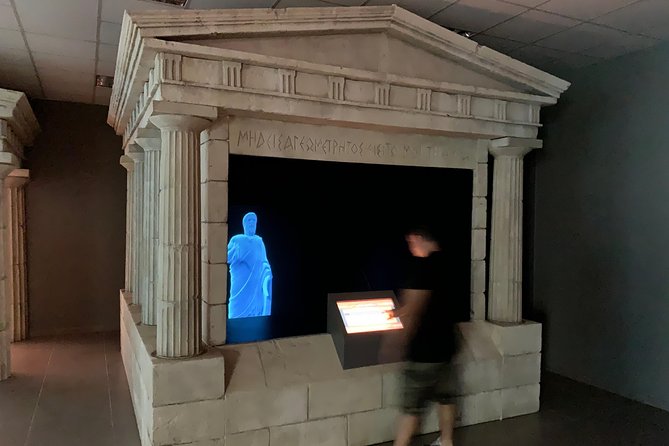
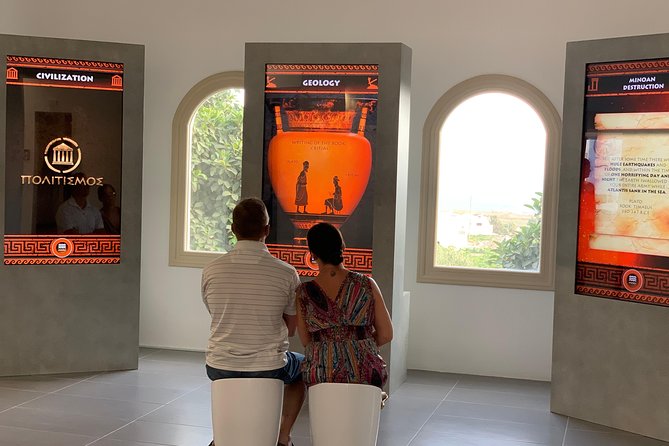
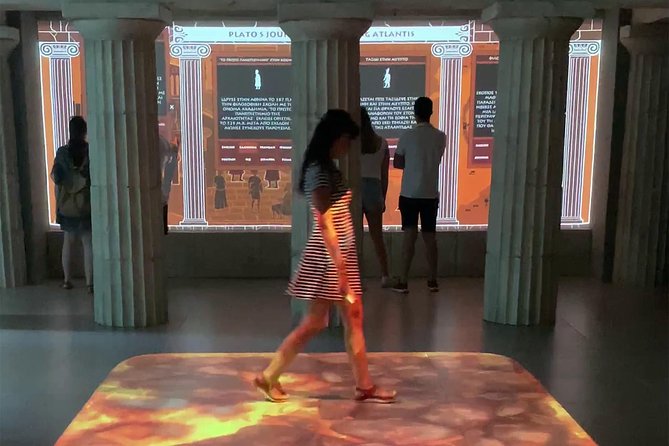
One of the more interesting parts follows Plato’s search for the ideal city through an interactive fresco. You do not simply hear that Plato wrote about Atlantis. You get a sense of how his ideas about society, order, and an ideal community fit into the larger story.
The attraction also lets you discuss the subject with an interactive representation of Plato. This gives the myth a human voice and helps younger visitors follow the story without facing a long lecture.
The historical point is important. Atlantis comes to modern audiences mainly as a lost civilization story, but its most famous written source is connected to Plato. The presentation uses that connection to show how philosophy, politics, myth, and natural disaster became linked.
I like this part because it adds a little thought to what could otherwise be a simple special-effects attraction. You are encouraged to consider why Plato told the story and how people have connected it to Santorini.
Still, the treatment is introductory. If you already know Plato’s dialogues or have read serious theories about Atlantis, you will not find a detailed debate here. The value is in giving families and casual visitors a clear starting point.
The world’s largest Atlantis diorama
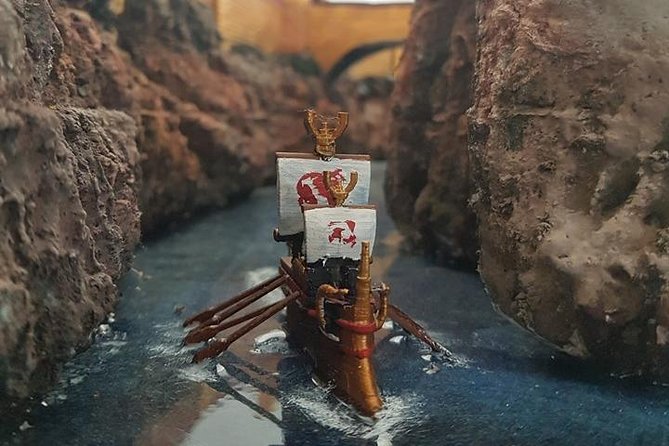
The large Atlantis diorama is the most traditional museum-style feature. It lets you see the mythical city as a complete scene rather than as separate images on a screen.
For children, this can be the easiest part to understand. They can look at the buildings, streets, and setting and imagine how the city might have worked. The model also gives the experience a physical centerpiece, balancing the more modern projections and digital effects.
Dioramas are especially useful when a subject is speculative. There is no confirmed Atlantis for you to inspect, so the model is an interpretation. It should not be mistaken for archaeological proof. Instead, it shows how the city is imagined within the story.
You may spend only a short time here, especially if your family moves quickly. The attraction lasts about an hour overall, so each section is designed to deliver its point without demanding a long pause. That makes the visit easy to fit into a day, but it also means you should not expect a vast exhibition.
A few more Santorini trips worth weighing up
- Santorini: The Greek Wedding Show Entry Tickets
★ 4.8 · 894 reviews - Megalochori: Lost Atlantis 9D Experience Museum Entry Ticket
★ 4.6 · 440 reviews - Santorini: Akrotiri Entry Ticket and Audio Guide
★ 3.9 · 348 reviews - Santorini: Ticket for Akrotiri Archaeological Site
★ 4.0 · 24 reviews
Santorini’s geological story in holographic form
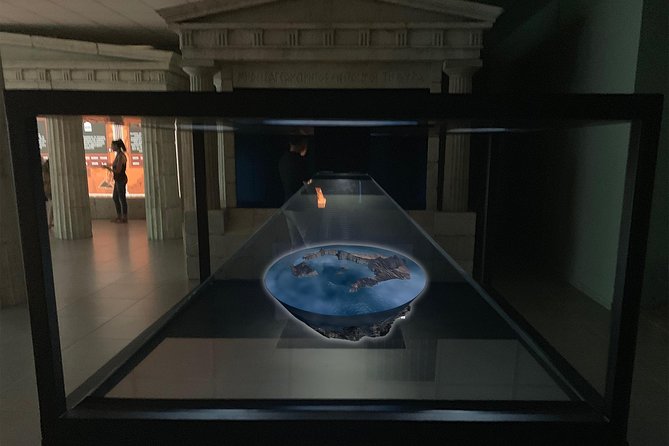
A holographic presentation traces the geological development of Santorini from prehistoric times to today. This is one of the strongest educational reasons to visit.
Santorini is not only famous for white buildings and sunset views. Its identity comes from volcanic activity, and the island’s shape reflects major geological change. The holographic display gives you a visual timeline for that process.
I find this especially useful before visiting other parts of Santorini because it provides context for the island beneath your feet. You can look at the caldera and volcanic scenery afterward with a clearer idea of how natural forces shaped the setting.
The display also helps connect the real island to the Atlantis legend. The experience does not need to prove that Santorini is Atlantis to be interesting. It shows why the island’s geological past has inspired that idea.
As with the Plato section, the treatment is made for general audiences. You will get a compact explanation rather than a university lecture in geology. That is a good fit for families and visitors who want a readable introduction, but specialists should treat it as a primer.
Why the one-hour length works
The advertised visit takes about one hour, and that is a useful length for Santorini. A full day on the island can already include villages, viewpoints, beaches, churches, and volcanic sites. A short indoor attraction gives you a break from the sun and adds variety without taking over the day.
Families with children may appreciate the pace. A young child can often handle an hour of changing scenes, while a longer museum visit might become tiring. The digital show, diorama, fresco, and hologram also provide different ways to keep attention.
For two adults and two teenagers, an hour is likely to feel about right if you move through the displays at a steady pace. Teenagers who enjoy visual effects may like the 9D section, while those with little interest in mythology may finish quickly.
The short duration can be a drawback for adults seeking a major cultural attraction. At $16.93 per person, the ticket is not an all-day admission. You are paying for a focused experience, so the value depends on how much you enjoy interactive storytelling.
I would not plan an entire day around it. Treat it as one stop in Megalochori or as a useful indoor activity during a Santorini sightseeing day.
Who will get the most from the $16.93 ticket
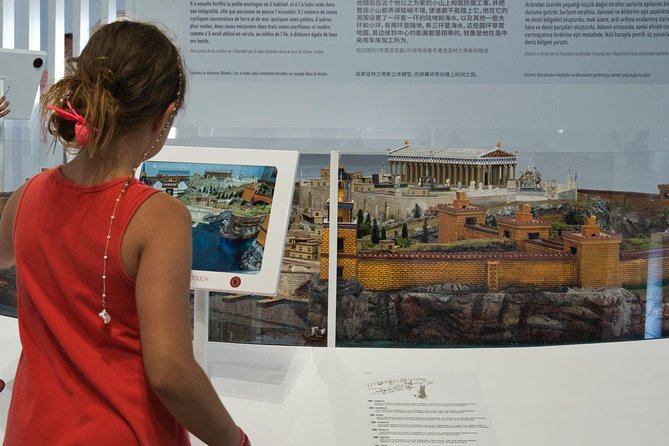
The price is reasonable if you are visiting with children and want an activity that combines entertainment with basic history and geology. You get several elements in one admission: a dramatic 9D show, an interactive Plato presentation, a major diorama, an interactive fresco, and a holographic account of Santorini’s development.
That combination makes the ticket more useful than a simple short film. You can move from myth to philosophy to geology in one visit.
The value is weaker if your main interest is archaeology or ancient Greek art. There are no stated promises of original artifacts, expert lectures, or a long scholarly exhibition. In that case, you may prefer to spend your museum budget elsewhere and explore Santorini’s natural scenery directly.
Prebooking is practical because the attraction is often reserved about 19 days ahead. That does not tell you that every time slot will sell out, but it suggests that many people plan the visit before reaching the island. Booking ahead also gives you a mobile ticket and helps protect a place in your itinerary.
The ticket includes admission, and free cancellation is available if you cancel at least 24 hours before the scheduled start time. If you cancel later, the payment is not refunded, and changes made inside that 24-hour window are not accepted.
Planning the visit in Megalochori
The attraction is in Megalochori, so it fits naturally into a day focused on the southern part of Santorini. The information provided does not give a detailed walking route, parking plan, or exact meeting procedure, so you should check your confirmation for the practical details before setting out.
The site is near public transportation, which may help if you are not using a private vehicle. A mobile ticket keeps the booking simple, and confirmation is sent at the time of booking.
The experience is offered in English. That is important if you are comparing it with a guided tour in another language. You should expect the presentations and explanations to be in English rather than assuming multilingual commentary.
Service animals are allowed, and most people can take part. No special fitness level is stated. Since the experience is indoors and built around presentations and displays, it may suit a wide range of visitors, but you should still consider your own needs before booking.
Is it good for children?
This is one of the clearest reasons to choose the attraction. The mix of effects, models, and interactive storytelling gives children several ways to follow the subject.
The historical information is kept approachable. Instead of asking a child to study long text panels, the attraction shows the destruction of Atlantis, presents Plato as a character, and explains Santorini’s geological past with visual displays.
The age recommendation is 6 and older. That makes the intended audience clear, but age alone does not tell you how a child will react. The 3D destruction sequence may frighten younger or sensitive children, especially if they dislike simulated disasters.
I would prepare children in advance. Tell them they will see a dramatic presentation about a city being destroyed, not a real event happening around them. If your child enjoys rides and special effects, the 9D element may be the highlight. If your child prefers quiet museums, the diorama and geological display may be easier than the main show.
Adults should also remember that this is designed for families. The pace and tone will feel simple if you are visiting without children, but the content still offers a pleasant introduction to Plato and Santorini’s volcanic story.
What the experience does best, and where it falls short
The strongest part is the way it makes abstract ideas visible. Atlantis is imaginary and Plato’s writing can feel distant, but the attraction gives both subjects a physical and visual form.
The geological material is another strength. It explains why Santorini has such a strong connection to stories of destruction and rebirth. You leave with more than a fantasy tale, even if the presentation stays at an introductory level.
The main limitation is depth. You will not spend hours examining artifacts, comparing competing Atlantis theories, or studying detailed archaeological evidence. The attraction is best understood as a family-friendly interpretation of a famous story.
The use of English only may also matter to some families. If everyone in your group is comfortable with English, this should be straightforward. If not, check before booking because the listed language is English.
The experience receives a 4.5 rating from 124 ratings, with 90 percent recommending it. Those figures fit the attraction’s likely audience: people who want a short, clear, entertaining activity, especially families with younger children. They do not mean every adult will find the subject equally rewarding.
Should you book the Lost Atlantis Experience?
Book it if you want a one-hour family activity that combines Santorini’s volcanic past with Plato’s Atlantis story. The 9D show, interactive fresco, large diorama, and holographic timeline give children plenty to see, and the indoor setting makes it a useful pause in a busy sightseeing day.
I would also choose it if you are curious about the link between Santorini and Atlantis but do not want a long academic presentation. At $16.93, the ticket offers fair value for a compact, multi-part attraction.
Skip it if you want original archaeology, detailed historical debate, or a full museum visit. Adults and older teens may find the material too basic, and the disaster effects may not suit every child.
For families with children aged 6 and up, this is an easy activity to justify. For everyone else, book only if the mix of mythology, geology, and visual effects matches your interests.
FAQ
How much does the Lost Atlantis Experience ticket cost?
The ticket costs $16.93 per person.
How long does the experience last?
The visit lasts approximately one hour.
What language is the experience offered in?
The experience is offered in English.
What age is the attraction suitable for?
The experience is intended for everyone aged 6 and older.
What is included with admission?
Admission to the Lost Atlantis Experience is included. The visit includes the 9D Atlantis destruction presentation, interactive dioramas, Plato’s interactive story, an interactive fresco, and a holographic presentation about Santorini’s geological development.
Is the attraction near public transportation?
Yes. The attraction is near public transportation.
Can I cancel the booking for a refund?
Yes. You can cancel up to 24 hours before the experience start time for a full refund. Cancellations or changes made less than 24 hours before the start time are not accepted for a refund.
Just added around Santorini
- Private Fishing Tour – Sunset (transportation included)★ 5.0 · 25 reviews
- Unique 3-Hour Tour of Santorini for Cruise Ship Passengers★ 5.0 · 3 reviews
- Perivolos: Beach Experience at Wet Stories★ 3.7 · 29 reviews
- Private Fishing Tour – Morning (transportation included)★ 5.0 · 8 reviews
- Romantic Private Day Tour in Santorini★ 5.0 · 5 reviews
- Santorini Rent a Boat – License free private cruise★ 5.0 · 11 reviews
- Winery – Oia Sunset Tour★ 4.5 · 4 reviews
- Woodcarving Workshop in Santorini★ 5.0 · 7 reviews
Tickets, compared.