
Review · AKROTIRI TOURS
Private Guided Tour of Akrotiri Excavations in Santorini
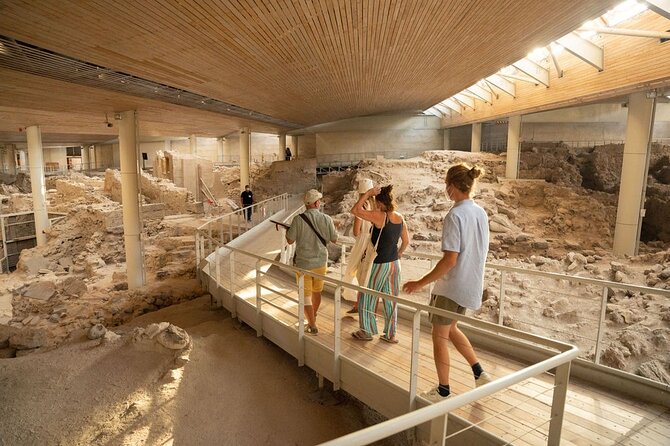
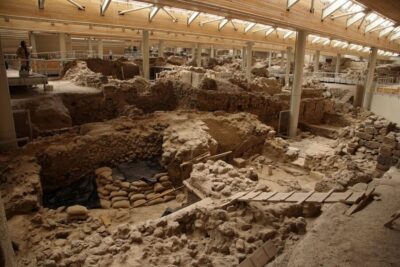
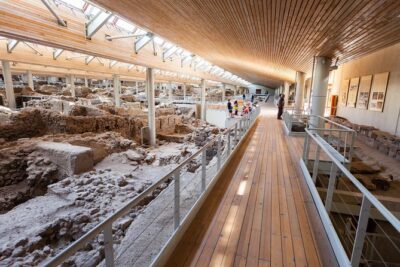
Akrotiri is not simply a pile of old stones. Beneath its protective roof, you can trace the streets of a Bronze Age city preserved in volcanic ash, with homes, pottery, furniture, frescoes, and plumbing still offering clues about life thousands of years ago. Guide Kostas turns those remains into a place you can understand.
I like the private format, since Kostas can adjust the pace and spend more time on the subjects that interest you. I also like his use of visual aids and clear explanations, especially when the ruins alone are difficult to read. The main drawback is practical: the $240.59 price covers up to four people, but admission and a €20-per-person fee are extra.
Key points to know before booking
- Akrotiri needs interpretation: The site is impressive, but many details are architectural traces that make more sense with a guide.
- Kostas focuses on the evidence: Expect discussion of urban planning, trade, daily life, religion, frescoes, furniture, pottery, and plumbing.
- This is a private visit: Only your group participates, with time for questions and a pace suited to your interests.
- The tour lasts about 1 to 1.5 hours: You can stay inside the archaeological site afterward and continue on your own.
- Bring the admission budget: Your booking does not include the entrance ticket or the €20 fee per person.
- The Atlantis connection is part of the story: Kostas explains the theory linking Plato’s tale with the buried settlement, without reducing the visit to a legend.
Why Akrotiri makes a guide worthwhile
Akrotiri is often called the Greek Pompeii, though the comparison has limits. The city was buried by a volcanic eruption rather than by the same event that destroyed Pompeii, and its preservation has a different story. Still, the basic idea holds: a sudden disaster covered an active settlement and left behind a remarkable record of ordinary life.
The trouble is that ruins rarely explain themselves. A wall may look like a wall. A narrow channel may look like a trench. A broken vessel may seem like a fragment with no story. At Akrotiri, those pieces can reveal planning, sanitation, trade, household routines, and social organization.
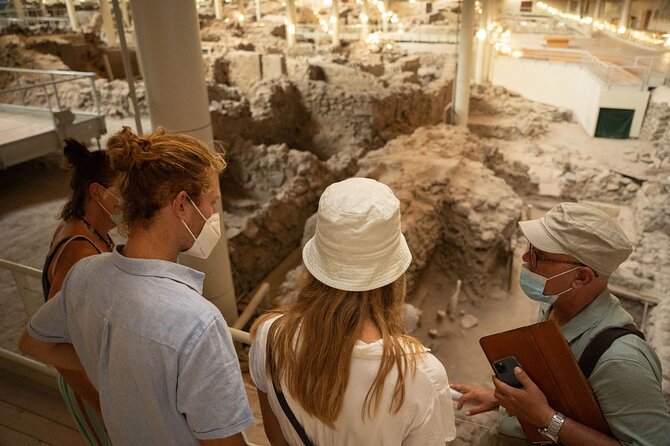
That is where Kostas adds real value. His approach centers on explanation rather than simply walking you from one point to the next. You can expect him to use visual aids to show how the buildings and streets may have functioned, then connect those images with details still visible in the excavation.
I would be especially inclined to book a guide if this is your first visit to a major archaeological site. You do not need a background in ancient history to follow the tour. The focus is on making the evidence readable and giving you a picture of the people who lived here.
More Akrotiri tours and tickets:
- Akrotiri: Guided Horseback Riding Day Trip to a Beach
★ 4.9 · 477 reviews - Santorini: Akrotiri Entry Ticket and Audio Guide
★ 3.9 · 348 reviews - Archaeological Bus Tour To Akrotiri Excavations & Red Beach
★ 4.6 · 280 reviews
Meeting Kostas at the excavation entrance
The meeting point is at the entrance gate of the Akrotiri archaeological site. You purchase your admission separately, then meet Kostas for a short orientation before entering the excavations.
This opening takes about five minutes, but it matters. Akrotiri is easier to appreciate when you know what kind of place you are about to see and what the tour will cover. It also gives you a chance to settle into the visit before the main explanation begins.
The tour is offered in English and is private for your group. That is useful if you want to ask questions without holding up a larger party. It also allows Kostas to adjust the discussion to your interests, whether you care most about architecture, ancient technology, art, religion, or the eruption.
The site is near public transportation, but hotel pickup and drop-off are not included. Plan to reach the entrance independently and allow time to buy the required admission ticket before the scheduled meeting.
Walking through a Bronze Age city
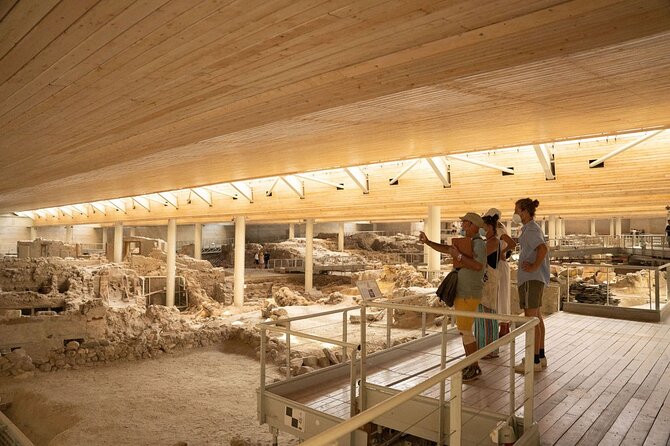
The main visit lasts about 1 hour and 15 minutes, with the full experience running roughly one to one and a half hours. The exact rhythm can change because this is a private tour, not a fixed group lecture.
The first major subject is urban planning. Akrotiri was not an isolated farmstead. The remains point to an organized settlement with streets, buildings, rooms, and systems designed for a functioning community.
I find this part valuable because it moves the site away from the usual image of archaeology as broken columns and empty foundations. You begin to see how people arranged homes, moved through the city, worked, stored goods, and shared public or religious spaces.
Kostas also discusses architecture in practical terms. You might look at the way buildings were arranged, the size and purpose of rooms, and details that suggest several levels or specialized areas. The goal is not to claim certainty where the evidence is incomplete. It is to show how archaeologists build a picture from what remains.
For you, the best benefit is context. Without it, you may notice a sophisticated wall or doorway but miss why it matters. With an explanation, a small architectural detail can become evidence of planning, resources, and social organization.
Pottery, furniture, and the shape of daily life
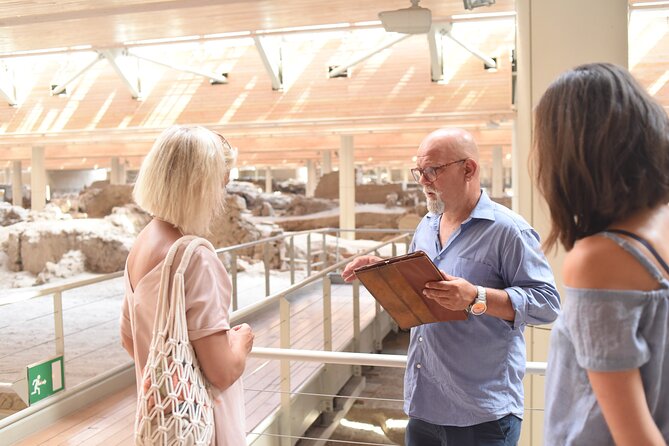
Akrotiri is particularly useful for understanding daily life because the volcanic ash protected more than monumental structures. The site has produced pottery, furniture, and household objects that help fill in the picture.
Kostas connects these discoveries with questions you can easily relate to. What did people store? How did they prepare or serve food? What objects belonged in a home? Which goods may have arrived through trade? What can the arrangement of rooms tell us about work and family life?
The answers are not always complete, and that is part of the appeal. You are not simply being handed a list of dates. You are shown how small finds can suggest larger patterns.
The discussion of trade is another useful layer. Akrotiri was part of an Aegean world with links beyond its immediate setting. Pottery and other objects can help archaeologists consider movement, exchange, and contact between communities.
If you enjoy archaeology because it reveals ordinary people, this is likely one of the strongest sections. Monumental buildings tell you what a society wanted to display. Furniture, vessels, storage areas, and plumbing tell you how people actually lived.
A few more Santorini trips worth weighing up
- Private Santorini Tailor Made – Choice of the Guest!
★ 5.0 · 1,972 reviews - Private Classic Santorini Panorama: Visit the most popular destinations!
★ 5.0 · 872 reviews - 6-Hour Private Best of Santorini Experience
★ 5.0 · 720 reviews - Private Santorini Sightseeing Tour – Customizable,Cruise Friendly
★ 5.0 · 717 reviews
Frescoes, religion, and ideas in color
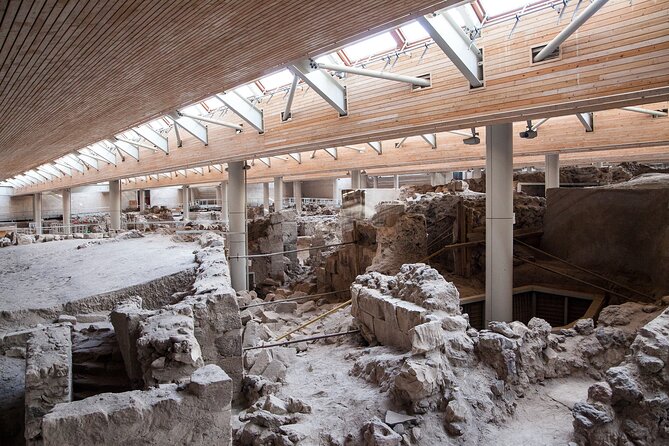
The frescoes are among Akrotiri’s most memorable remains, but they need explanation too. Their subjects are not only decorative. They offer clues about nature, animals, ceremonies, clothing, travel, and the way people imagined their world.
Kostas discusses the themes and symbolism of the fresco art, helping you connect the paintings with the wider settlement. You can consider where such images appeared, who may have viewed them, and what they might have meant within domestic or religious settings.
Religious practices are also part of the tour. The evidence is open to interpretation, so a good explanation should separate what is clearly visible from what is proposed by scholars. That balance is important at any archaeological site, and it keeps the visit interesting rather than turning every uncertain detail into a firm claim.
I like that this subject broadens the experience beyond construction methods. Akrotiri was not only a place of houses and streets. Its images and symbols show people expressing beliefs, status, identity, and ideas about the world around them.
The eruption and the Atlantis question
The volcanic eruption is central to Akrotiri’s story. It destroyed the settlement, but the ash also covered and preserved much of it. That strange trade-off is why you can study objects and structures that would otherwise have disappeared.
Kostas explains both the eruption and the preservation of the site. You will learn how the disaster shaped what archaeologists can see today, as well as what it prevents them from knowing. A city sealed in ash can preserve evidence, but it can also leave questions about the final moments and the people who lived there.
The tour also explores the possible connection between Akrotiri and Plato’s story of Atlantis. Some people believe the destruction of this Aegean settlement may have helped inspire elements of that tale. The theory is a memorable part of the visit, but you should treat it as an idea to examine, not as proven fact.
That distinction makes the Atlantis discussion more useful. Akrotiri is compelling enough without turning it into a fantasy attraction. You can enjoy the mystery while keeping your attention on the archaeological evidence.
What the private format adds
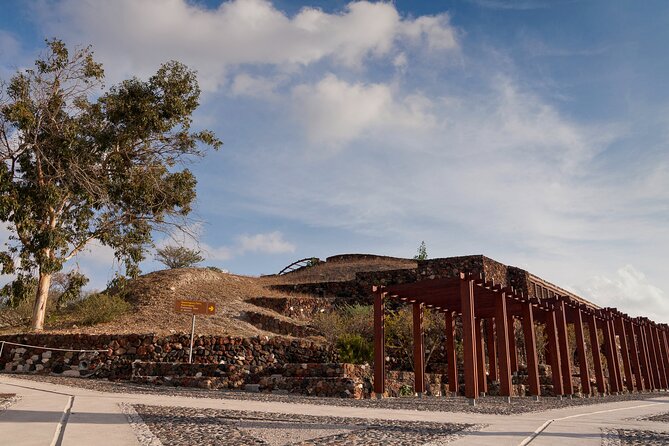
A private tour for up to four people costs $240.59 per group. On paper, that may look expensive for a visit lasting about 75 minutes, but the calculation changes if you fill the group. Split four ways, the guide cost is about $60.15 per person before admission and the additional €20-per-person fee.
For one person or a couple, the price is harder to justify if you are comfortable reading signs and exploring at your own pace. For a family or a small group of friends, the cost can make better sense, particularly if everyone is interested in the site and wants a tailored explanation.
The private setup also gives you control over the conversation. You can ask Kostas to spend more time on the plumbing, frescoes, or possible Atlantis link instead of following a fixed script. If someone in your group has limited interest in one subject, the guide can move on rather than holding a large party to the same pace.
This is not a quick photo stop. You are paying mainly for interpretation. The value depends on how much you want to understand the settlement rather than simply see it.
Timing, physical demands, and what is not included
The tour requires a moderate level of physical fitness. The supplied information does not give a precise count of steps, distances, or surface conditions, so you should be prepared for a walking visit through an archaeological excavation rather than a seated presentation.
Wear practical shoes and plan around the local weather, though the site itself is presented as an enclosed archaeological setting. Food and drinks are not included, and neither is transportation from your hotel.
Admission is not included at either meeting stage or during the main visit. You need to buy the archaeological site ticket separately, and the listed additional fee is €20 per person. Check the final cost carefully before booking so the attractive group price does not catch you by surprise.
Confirmation is sent within 48 hours, subject to availability. The tour is often booked well ahead, with an average advance period of 37 days, so I would not leave it until the last moment if your Santorini schedule is fixed.
After the guided portion, the tour ends inside the archaeological site. You may stay longer and continue exploring independently. That is a useful arrangement because 75 minutes can give you a strong framework, but you may want extra time to look again at the details Kostas has pointed out.
A note about the mixed rating information
One four-star comment attached to the experience describes horseback riding along cliffs and through town. That does not match this activity. Kostas specifically explains that he offers certified guiding inside Akrotiri and does not offer horseback tours.
You should ignore that unrelated comment when judging this experience. The useful information about this tour concerns the archaeological visit, Kostas’s explanations, his visual aids, and the way he makes architectural details easier to understand.
The overall record is very strong, with a 4.9 rating from 14 reviews and a 100 percent recommendation figure. The most consistent praise centers on Kostas’s passion, thorough explanations, easy-to-follow style, and ability to show why Akrotiri matters. Those are the points I would weigh most heavily.
Who should book this Akrotiri tour
I would recommend it to first-time visitors to Akrotiri, families with older children, couples who enjoy archaeology, and small groups that want to ask questions. It is also a good choice if you have visited ruins before but often leave wishing you understood what you saw.
You may not need it if you prefer silent exploration, plan to spend only a few minutes at the site, or are traveling alone and want to keep costs low. The extra fees and separate admission also make the total price higher than the headline group rate.
Book it if you want Akrotiri to become a readable ancient city rather than a collection of remains. Skip it if you only want a quick look. For most small groups with a real interest in Santorini’s past, Kostas’s explanations are the reason to pay for the visit.
FAQ
Where does the tour begin?
It begins at the entrance gate of the Akrotiri archaeological site in Mesaria, Santorini.
Where does the tour end?
The guided visit ends inside the Akrotiri archaeological site. You may remain there afterward and continue exploring independently.
How long does the tour last?
The experience lasts approximately one to one and a half hours. The main guided visit is scheduled for about 1 hour and 15 minutes, with a short orientation beforehand.
Is admission to Akrotiri included?
No. The archaeological site admission ticket is not included and must be purchased separately.
Are taxes and fees included?
No. An additional fee of €20 per person is listed under fees and taxes.
Is hotel pickup included?
No. Hotel pickup and drop-off are not included, so you must make your own way to the entrance.
Is this a private tour?
Yes. Only your group participates, with a maximum of four people.
What language is the tour offered in?
The tour is offered in English.
Can I cancel for a full refund?
Yes, if you cancel at least 24 hours before the experience start time. Cancellations or changes made less than 24 hours before the start time are not accepted for a refund.
Just added around Santorini
- Private Fishing Tour – Sunset (transportation included)★ 5.0 · 25 reviews
- Unique 3-Hour Tour of Santorini for Cruise Ship Passengers★ 5.0 · 3 reviews
- Perivolos: Beach Experience at Wet Stories★ 3.7 · 29 reviews
- Romantic Private Day Tour in Santorini★ 5.0 · 5 reviews
- Santorini Rent a Boat – License free private cruise★ 5.0 · 11 reviews
- Private Fishing Tour – Morning (transportation included)★ 5.0 · 8 reviews
- Winery – Oia Sunset Tour★ 4.5 · 4 reviews
- Woodcarving Workshop in Santorini★ 5.0 · 7 reviews
Akrotiri Tours, compared.
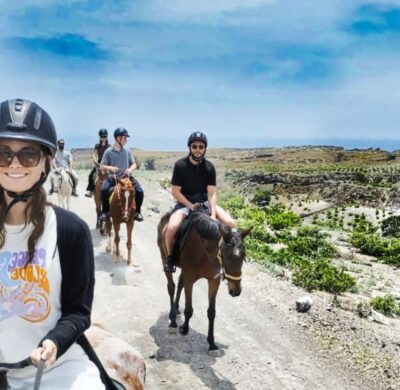
Archaeological Bus Tour To Akrotiri Excavations & Red Beach
Read our review →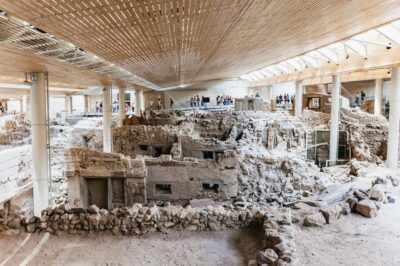
Archaeological Bus Tour to Akrotiri Excavations & Red Beach
Read our review →
Private Cultural Villages Sightseeing & Akrotiri Excavations
Read our review →
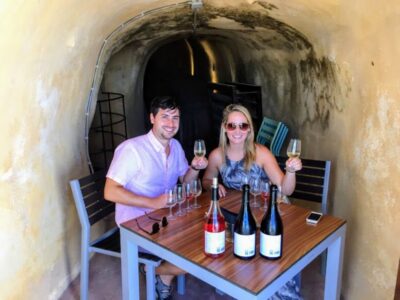
Private Group Visit to Akrotiri & 3 Wineries with Tastings
Read our review →Browse the lists this tour appears in